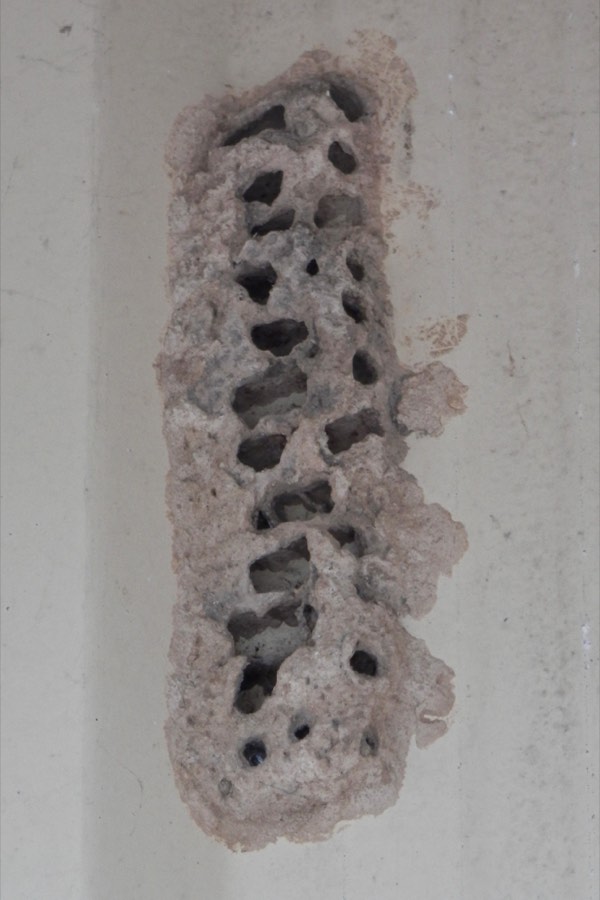
No match foundTry a plainer description, or one word: wasphole in the lawnmousebird poopmud tubesspiderbatmoose.
Wasatch BackMountain Edition · 2026
A Board Certified Entomologist’s Field Guide
The One-Hour Entomology Degree
Mountain EditionPark City, Heber and the Wasatch Back
21 years in the field, a master’s, and a board certification, minus the 21 years.
A field guide for hotel and resort engineering, vacation-rental managers, HOA community managers and boards, and private clubs: what matters at 5,500 to 8,000 feet, what doesn’t, and what to actually do about it.
Your local entomologist
Trent Frazer, BCE
Board Certified Entomologist · M.S. Entomology · Falcon Pest Control
Trent Frazer, BCE #B3413, is one of fewer than 440 Board Certified Entomologists and Utah’s only BCE in independent commercial practice, with a master’s in entomology and 21 years in the field. When a bug, a bird, or a burrow needs a real answer, call Falcon Pest Control at (801) 477-0223.
How to use this guide
Flip to your problem. Get the answer.
This isn’t a textbook. It’s a desk reference for properties at 5,500 to 8,000 feet: hotels and resorts, nightly rentals, HOAs, and private clubs from Park City to Heber. Every pest gets the same six lines so you always know where to look: what it is, whether it matters, whether it’ll get worse, whether you can handle it yourself, whether it’s legally protected, and when it crosses the line into a real problem. Start with the Master Triage, read At Elevation for what the mountain adds, then use the index to jump straight to whatever’s in front of you.
Leave it
A nuisance — ugly or annoying, but no real harm. Tolerate it or do the simple fix.
Watch it
Matters in the wrong spot or if it grows. Worth handling, not an emergency.
Act on it
A genuine hazard — sting risk, disease, or real damage. Handle promptly.
DIY
A manager or resident can legally handle this — usually mechanical, no license.
Licensed pro
Crosses into licensed-applicator or permitted-operator work. Make the call.
Protected
Illegal to kill under Utah law. Exclusion or DWR only — the costly mistake to avoid.
★ The Master Triage
Five questions for any pest call
Before you do anything — or promise a resident anything — run these five in order. Most calls answer themselves by question two.
Is anything actually at risk?A sting/venom threat, a disease, or real structural or landscape damage? If none of those — it’s a nuisance. Tolerate it or do the simple fix.
Common area, or private lot?The HOA owns the clubhouse, pool, playground, signage, ponds, and common landscaping — pests there are your job. Inside a resident’s own home or yard, it’s almost always theirs.
Will it resolve on its own, or get worse?Some things die off with the season. Others compound fast. Knowing which buys you the right amount of urgency.
Can you legally do it yourself?Mechanical work and habitat changes need no license. Chemical work on common property, anything restricted-use, and any protected species do. (See “The Licensing Line.”)
Has it crossed into a program?One mouse is a trap. Recurring evidence across a building is a managed program. (See “When It Becomes a Program.”)
? Before you answer the phone
Whose Bug Is It?
Who pays depends on the community type — and it’s usually not the association.
The first question a manager actually faces isn’t “what is it” — it’s “is this mine to deal with?” The answer turns on what the association owns and maintains versus what the individual owner controls, and that line moves with the community type. Your governing documents (CC&Rs and the maintenance matrix) are the final word; this is the general pattern.
Single-family neighborhoods
The home, its interior, and the private lot are the owner’s — so pest control there is almost always the resident’s responsibility. The association’s job is the common areas it owns and maintains: the clubhouse, pool, playground, common landscaping, signage, ponds, and shared structures. For most of these calls, the honest answer to a resident is “that one’s yours” — and your pest budget is really about the common areas.
Townhomes & condos within the community
The line shifts, because the association typically owns and maintains the building shells, roofs, attics, shared walls, and common structural elements. So pests that live in or travel through shared structure — roof rats in a shared attic, cockroaches or bed bugs moving unit-to-unit through shared walls, birds or bats in a shared roofline — become an association matter, even though the unit interior is still the owner’s. Here the manager owns more of the problem, because shared structure spreads pests.
The dividing question
Nearly every case comes down to one thing: is the pest in or on something the association owns and maintains, or in something the individual owner controls? Common element = association. Inside the unit or on the private lot = owner.
Where the real answer lives
When it’s genuinely unclear, the CC&Rs and the community’s maintenance-responsibility chart govern — not a rule of thumb. That’s the document to point to, and the reason “it depends on your community” is the correct first answer.
What the mountain adds: snow that hides the damage, units that can sit empty between seasons, and neighbors that are not pests at all.
The rest of this guide covers pests you will also meet on the Wasatch Front. This section covers what changes up here. Two patterns run through it. First, snow hides rodent work: voles and pocket gophers keep working under it, and the damage shows up all at once at melt. Second, a closed unit or lodge is undisturbed shelter: deer mice move indoors when it gets cold, cluster flies settle into upper floors for the winter, and bats roost in buildings. The person who opens that unit back up is the one who needs the cleanup protocol. Each entry points to the full entry later in the guide.
Voles Under SnowMicrotus · the damage you find at snowmelt; full burrow read in §2
Watch itDIY-able
What it is
Voles keep working all winter. In USU Extension’s words, “During the winter, voles move about under the protection of snow cover,” leaving surface runway systems with numerous burrow openings. You see none of it until the snow goes, and then you see it all at once. USU Extension, Ask an Expert: Five Tips to Prevent Vole Damage (2016).
Does it matter?
Yes, for trees and shrubs. Vole girdling “usually occurs in the fall and winter and may not be discovered until the snow melts in the spring,” and young trees girdled more than 50 percent around the trunk have a low survival rate. Look for irregular gnaw patches at ground level, each mark about 1/8 inch wide. USU Extension (2016).
Resolve / escalate?
What you find at melt is already done. Tree wound dressings will not help a girdled trunk; proper water and fertilizer through the growing season reduce the stress. The real decision is protecting the plantings before the next snow. USU Extension (2016).
DIY or pro?
DIY-able for protection. Put hardware-cloth cylinders around young trees, mesh no larger than 1/4 inch, buried at least 6 inches, and taller than the typical snow line. Clear mulch 3 feet or more from the base of trees, and set snap traps with the trigger in the runway. Runways across a whole slope or common area are a program. USU Extension (2016; 2023); USU IPM, Voles.
Protected?
No certificate needed. Under DWR rule R657-19, voles in Summit and Wasatch counties are nongame mammals that may be taken year-round without a certificate of registration. Live capture is prohibited under that rule unless DWR authorizes it under R657-3. Utah Admin. Code R657-19-2, R657-19-3(2)(a), R657-19-5.
Threshold
Girdled trunks or runway networks at melt = protect the surviving plantings before fall. Full hole-and-runway ID, with photos, in §2.
Photo to comeVole girdling at the base of a young tree, revealed at snowmelt
Girdling shows up at melt. Irregular gnaw patches at ground level on a young trunk. The runways themselves are pictured in §2.
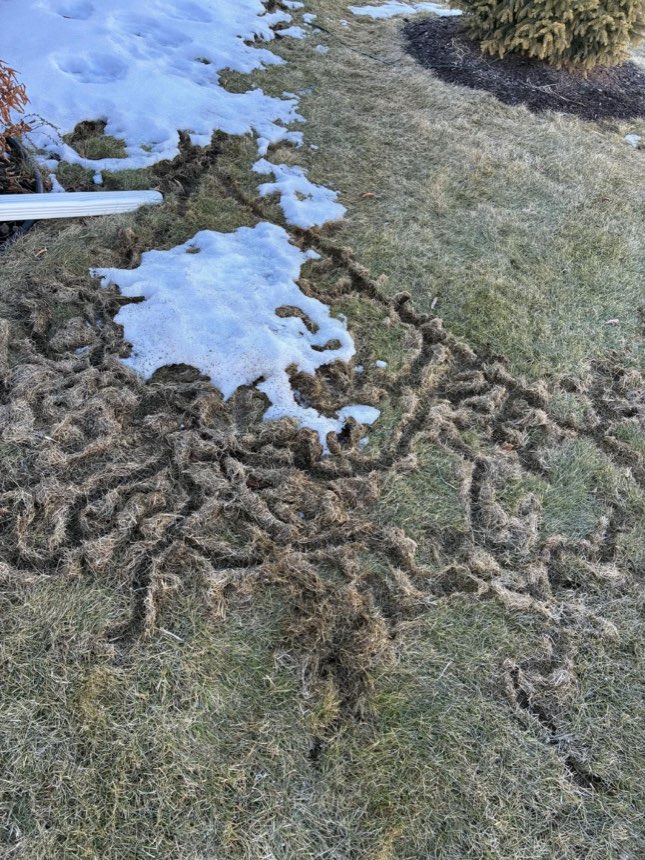
Pocket Gopher Soil CastsThomomys · the soil tubes left on the lawn at melt; full mound ID in §2
Watch itLicensed pro
What it is
Pocket gophers are active all year. When snow is present they tunnel in it, pushing soil from their burrows up under the snow. When the snow melts, the soil casts (tubes) left lying on the turf show where they worked all winter. USU Extension, Pocket Gophers (Wiscomb & Messmer).
Does it matter?
The casts rake out. What they mark does matter: gophers damage underground utility cables and irrigation pipes, and they girdle and clip tree stems and prune roots. USU Extension, Pocket Gophers (2024).
Resolve / escalate?
Casts at melt show where gophers worked all winter, and a single pocket gopher may push up as many as 300 soil mounds a year. USU Extension (2024).
DIY or pro?
Trapping can be extremely effective for small areas or light infestations; baiting is licensed work on common property (see §2 and The Licensing Line). Protect valuable trees and shrubs with 3/8-inch hardware cloth. USU Extension.
Protected?
No. Legal detail in the §2 entry.
Threshold
Casts spread across common turf at melt = map them while they are easy to see, and start before the summer mounding.
Photo to comePocket gopher soil casts lying on turf after snowmelt
Soil casts are the winter map. Rope-like soil tubes left on the lawn where gophers tunneled up into the snow. The fan-shaped summer mound is pictured in §2.
Uinta Ground SquirrelUrocitellus armatus · colony burrows with no soil plug
Watch itLicensed pro
What it is
Ground squirrels live in colonies with underground burrow systems. Openings are about 4 inches across with no soil plug, burrows run 5 to 30 or more feet long, and the squirrels are active by day and hibernate through the cold winter months. USU Extension’s ground squirrel guidance covers the genus Urocitellus, which includes the Uinta ground squirrel. USU Extension, Ground Squirrels.
Does it matter?
Yes, around structures. Burrowing can destroy lawns, collapse ditch banks, and undermine building foundations; ground squirrels also strip bark from young trees and carry a wide range of diseases. USU Extension.
Resolve / escalate?
Colonies grow. USU Extension advises watching for new burrows so the population is managed before it becomes too large. USU Extension.
DIY or pro?
For small populations, USU Extension recommends trapping while the squirrels are active (February to October); live capture is prohibited without DWR authorization, so use kill traps, with traps pre-baited (baited but not set) for a few days first. Baiting is licensed work on common property (see The Licensing Line). USU Extension.
Protected?
No. Ground squirrels are nongame mammals under DWR rule R657-19 and, in Summit and Wasatch counties, may be taken year-round without a certificate of registration. Live capture is prohibited under that rule unless DWR authorizes it under R657-3. Utah Admin. Code R657-19-2, R657-19-3(2)(a), R657-19-5.
Threshold
New burrows at a foundation, retaining wall, or ditch bank = act while the colony is small.
Photo to comeUinta ground squirrel at an open burrow, no soil plug
An open hole, no mound plug. That separates a ground squirrel burrow from a gopher’s plugged mound.
Bushy-Tailed Woodrat (Pack Rat)Neotoma cinerea · garages, crawlspaces, and vehicles that sit
Watch itExclusion + cleanup
What it is
A woodrat, not a Norway rat or a roof rat. The bushy, squirrel-like tail that gives it its name is the field mark.
Does it matter?
Yes, for seasonal properties and stored vehicles. CDC notes that rodents build nests in cars, trucks, campers, and other vehicles, especially ones used infrequently, and get into the passenger compartment through ducting, rusted areas, and cable conduit. Before starting a vehicle that has sat idle, air it out and check the air intakes and filters. CDC, How to Clean Up After Rodents.
Resolve / escalate?
A nest left in place is still rodent waste (see the next entry), and the opening it came through stays open until someone seals it.
DIY or pro?
Clean it as rodent waste. CDC’s vehicle steps: open the hood, doors, and trunk for 20 minutes; disconnect the battery before reaching into the engine bay; wear gloves and long sleeves; soak nest material and droppings with disinfectant for 5 minutes and pick them up with paper towels. No vacuum or high-pressure sprayer until it is disinfected, and replace an air filter that held nest material. The lasting fix is exclusion: seal holes and gaps in the home and garage. CDC.
Protected?
No certificate needed. DWR rule R657-19 treats rats and mice of the family Cricetidae, the family woodrats belong to, as nongame mammals; in Summit and Wasatch counties they may be taken year-round without a certificate of registration. Live capture is prohibited under that rule unless DWR authorizes it under R657-3, so trap-and-relocate is not the default answer. Utah Admin. Code R657-19-2, R657-19-3(2)(a), R657-19-5.
Threshold
Nest material in an engine bay, garage, or crawlspace = clean it as rodent waste and seal the opening before the property closes for the season.
Photo to comeBushy-tailed woodrat, showing the furred, squirrel-like tail
Photo to comeRodent nest material in a vehicle engine bay or air intake
The tail names it. A furred, bushy tail separates a woodrat from the bare-tailed Norway rat in §3.
Deer Mice in Units That Sat EmptyPeromyscus maniculatus · hantavirus and the opening-day cleanup; also see §3
Act on itSpecial cleanup
What it is
Brown to gray on top with a white belly and a furry tail. Deer mice favor fields and vegetation around buildings and move indoors when it gets cold. USU Extension, Deer Mouse. The most common hantavirus that causes hantavirus pulmonary syndrome in the United States is spread by the deer mouse. CDC, About Hantavirus.
Does it matter?
Yes, for whoever opens the unit. When fresh urine, droppings, or nesting material from an infected rodent are stirred up, the virus can get into the air, and people are infected by breathing it. CDC calls hantavirus pulmonary syndrome a severe and potentially deadly disease of the lungs. CDC.
The cleanup, in order
Open all doors and windows for 30 minutes and leave the space while it airs out.
Put on rubber or plastic gloves.
Spray droppings, urine, and nests with a fresh bleach solution (1 part bleach to 9 parts water) or an EPA-registered disinfectant until very wet. Let it soak 5 minutes, or as the label directs.
Wipe it up with paper towels into a covered garbage can.
Mop or sponge the area with disinfectant and clean every hard surface: counters, cabinets, drawers.
Wash gloved hands, remove the gloves, then wash hands. Launder exposed bedding in hot water and dry it on high.
CDC, How to Clean Up After Rodents.
What not to do
Do not sweep or vacuum droppings, urine, or nests. CDC: it can put tiny droplets containing virus into the air. If someone already vacuumed, follow the cleanup steps anyway. CDC.
Heavy infestation
CDC calls for special precautions in buildings with heavy rodent infestation and in vacant dwellings with large numbers of rodents: coveralls, boots or shoe covers, gloves, goggles, and a half-mask air-purifying respirator with HEPA filters. Workers hired for that cleanup should contact the local or state health department. Rodents in the heating and cooling ducts are a job for a professional. CDC.
Threshold
Droppings found when a unit or lodge reopens = stop, air it out, and wet-clean. Before it closes again, fit tight door sweeps and seal around pipes and electrical conduits where they enter the walls. CDC; USU Extension.
Photo to comeMouse droppings in a drawer or on a counter in a unit that sat closed, before wet cleanup
Wet it before you wipe it. Droppings found on opening day get aired out, soaked, and wiped, never swept or vacuumed.
Bats in Lodges & Condo Attics18 Utah species · the guest-room call and the exclusion calendar; also see §8
Act on itProtected · do not kill
What it is
Utah has 18 bat species; some live here year-round and some migrate. Bats roost in buildings among other sites, and they can get through openings as small as 1/4 inch. Guano and grease marks on siding show where they get in. USU Extension, Bats; CDC.
A bat in an occupied room
Do not release it until you have talked with public health. CDC: if you find a bat in your home, contact animal control or your health department to safely capture it for rabies testing. Bat bites can be small enough to go unnoticed, so keep guests and staff out of the room and make the call. Utah DHHS: anyone who has contact with a rabid animal should contact their doctor or public health immediately. Never handle a bat bare-handed. CDC, Preventing Rabies from Bats (2025); Utah DHHS; USU Extension.
Protected?
Yes. DWR rule R657-19 requires a certificate of registration to take a bat of any species, and USU Extension puts it plainly: “Do NOT kill bats; they are protected by law!” A colony comes out by exclusion. Utah Admin. Code R657-19-4(1)(a); USU Extension.
The exclusion calendar
USU Extension: do not seal openings while bats and their young are present, late May through late July. CDC cautions against trapping young bats inside anywhere from May through August, and names fall and winter, when most bats leave, as the best time to bat-proof. This guide holds bat exclusion May through August, per CDC and DWR, and schedules it from September. USU Extension; CDC.
DIY or pro?
Watch where they exit at dusk, hang plastic sheeting or netting over the exits so bats can leave but not return, and seal once they are all out. On a lodge or condo roofline that is professional lift-and-ladder work, scheduled for fall. CDC; USU Extension.
Threshold
Any bat in an occupied room = public health call first. Guano or staining at a roofline = schedule fall exclusion.
Photo to comeGuano and grease staining below a roofline gap on a lodge or condo building
The staining marks the door. Guano and grease marks below a gap show where a colony goes in and out, and where the one-way exit goes in fall.
Cluster Flies & Boxelder Bugs in Closed UnitsPollenia spp. · Boisea trivittata · the top-floor winter invaders; also see §1
Leave itDIY
What it is
Cluster flies: dull grayish brown with yellow hairs on the thorax, slow-moving, often at indoor windows in winter. Their larvae develop as parasites of earthworms; they are not associated with garbage. Boxelder bugs: black with red markings, overwintering in cracks and crevices of buildings, especially on sunny, unshaded walls. USU Extension, Cluster Flies; Boxelder Bug.
Why the top floor
Cluster flies look for overwintering sites in buildings in late summer and early fall and typically settle in the upper levels: attics, wall voids, false ceilings. They can become active during warm spells in winter, and that is when they turn up on the window sills. USU Extension.
Does it matter?
No. Boxelder bugs are not a health threat, though they can stain light-colored materials and smell when crushed. The cluster flies did not breed in the unit; they came in to spend the winter. USU Extension.
DIY or pro?
DIY. Vacuum them. Prevention happens before late summer: caulk and seal exterior openings, cracks, and crevices, and keep screens in good repair. USU Extension.
Protected?
No.
Threshold
Sills full of flies at a winter turnover = seal the envelope before the next late summer. Watch sunny walls in fall for boxelder bugs looking for a way in. USU Extension.
Photo to comeCluster flies on an upper-floor window sill in winter
Slow flies on a winter sill. They spent the winter in the attic or wall void and woke on a warm day. Vacuum now; seal before next late summer.
Carpenter Ants in Log & Timber BuildingsCamponotus · 12 species in Utah; a moisture signal; also see §6
Watch itLicensed pro
What it is
Usually black, or black with reddish brown, in mixed sizes. They do not eat wood; they excavate galleries in it and push out sawdust-like frass. USU Extension, Carpenter Ants.
Why log and timber
Carpenter ants prefer wood with high moisture content, especially wood with mold or fungi, and an infestation usually points to a moisture problem. Nests turn up in structural wood, wall voids, ceilings, eaves, and voids above porches and bay windows. A log or heavy-timber building simply has more wood to check, so its moisture points are the inspection list. Firewood carried in from the forest is one way they arrive. USU Extension, Carpenter Ants: What You Should Know (ENT-121-08, 2008).
Signs
In Utah, swarms are most likely in spring, often in the late afternoon or early evening on warm, sunny days after rain. A swarm inside the building means the nest is likely inside. USU Extension (2008).
DIY or pro?
Fix the water first: leaks in the foundation, roof, and plumbing, and any water-damaged or decaying wood. Then a professional treats the nest. Spraying workers outside the nest will not get rid of them; the main nest and the satellites all have to be treated. USU Extension.
Protected?
No.
Threshold
Frass below a log, beam, or deck ledger, or a spring swarm indoors = find the moisture and the nest. The termite and nuisance-ant comparison is in §6.
Photo to comeCarpenter ant frass below a log or timber joint
Sawdust with no saw. Frass piling below timber is the sign; the moisture source above it is the cause.
Not a pest, and not a pest-control callMoose, elk, deer, and black bears are wildlife. The three entries below say what the property controls (attractants, distance, dogs, trash) and when to call the Utah Division of Wildlife Resources. After hours, DWR’s guidance is to call local police or the county sheriff, who can reach a conservation officer.
MooseAlces alces · not a pest; call DWR
Not a pest · call DWR
What it is
The largest member of the deer family in Utah: adults weigh 800 to 1,200 pounds, and bulls can stand 6 feet at the shoulder. Moose live in the mountains of northern and northeastern Utah, including urban areas along the Wasatch Front. Wild Aware Utah (Utah DWR partnership), Moose.
Does it matter?
Yes, for safety. Moose can be dangerous when they feel threatened, bulls can be especially aggressive in the fall breeding season, and moose can be very aggressive around dogs. Warning signs: hair standing up on the neck, snout licking, ears back. Wild Aware Utah.
What to do
Give it a lot of space. Stay calm, do not run, talk, and back off slowly the way you came. If it charges, get behind something solid, such as a tree. Keep dogs leashed: it is against Utah law to let dogs chase or harass wildlife. Wild Aware Utah.
Who handles it
Not pest control. Report an aggressive encounter to the nearest DWR office; after hours or on weekends, call local police or the county sheriff. Wild Aware Utah.
Threshold
A moose bedded at an entrance, a shuttle stop, or a path guests use = keep people and dogs back and call DWR.
Elk spend the summer high, usually between 6,000 and 10,000 feet, and in late fall most move down to lower elevation and less snow. Mule deer make the same kind of move, from high summer range to lower winter range, to avoid deep snow. Wild Aware Utah, Elk; Mule Deer.
Does it matter?
Mostly for safety and landscaping. Elk can be aggressive toward people and dogs during the rut, early September through mid-October, and mule deer bucks can become very aggressive in the late-fall rut. Deer can fall into window wells; cover them with grates or 1/4-inch hardware cloth. Wild Aware Utah.
Don’t feed them
Feeding elk and deer is strongly discouraged: public safety, the spread of chronic wasting disease among deer, elk, and moose, and harm from foods outside their diet, especially in winter. Wild Aware Utah.
Protecting plantings
A fence at least 7.6 feet high is the most effective way to keep deer out of a garden; motion-activated sprinklers are fairly effective. Wild Aware Utah.
Who handles it
Report aggressive, sick, or injured animals to the nearest DWR office; after hours, call local police or the county sheriff. Wild Aware Utah.
Threshold
An aggressive bull or buck near people, or an injured animal on the property = DWR.
Black BearUrsus americanus · not a pest; call DWR
Not a pest · call DWR
What it is
Utah’s mountains and forests are home to thousands of black bears, and they often live in the same places people camp, hike, and build houses. Utah DWR, Safety in Black Bear Country.
Does it matter?
Yes. If a bear gets food from a home or campsite even once, it may become aggressive in future attempts, which, in DWR’s words, “almost guarantees the bear will have to be destroyed.” Black bears can also do thousands of dollars in property damage quickly. Utah DWR.
Prevention
The part the property controls is trash. Store it in a secure location or a bear-safe container, put it out the morning of pickup rather than the night before, and clean the containers regularly. Utah DWR.
If one is on the property
Give it an obvious escape route; do not corner it. In an encounter, stand your ground: do not run, back up, lie down, or climb a tree, and give the bear a chance to leave. Utah DWR.
Who handles it
DWR, immediately, for a bear in a residential area or an aggressive bear. After business hours (8 a.m. to 5 p.m., Monday through Friday), call the police, who will contact a conservation officer. Utah DWR.
Threshold
Any bear in a residential area = call DWR. Not a pest-control job.
The mountain read, in one lineSnow hides the damage, closed units hold the evidence, and the biggest animals on the property are DWR’s. Walk the grounds at melt, wet-clean whatever a closed unit collected, and call public health before anyone releases a bat.
1 Bugs, Birds & Burrows
Stinging & Flying
What buzzes, what stings, and what to leave alone.
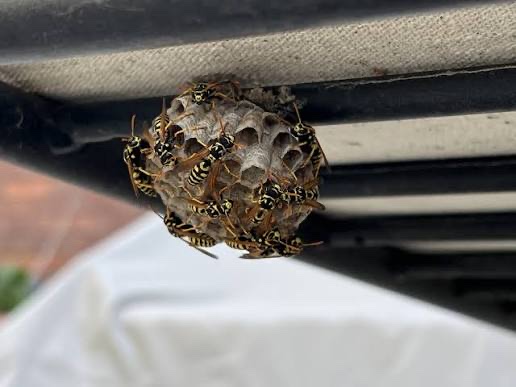
Paper WaspsPolistes — incl. the very common European paper wasp
Watch itDIY
What it is
Open, upside-down-umbrella nest — a single layer of cells you can see straight into. Under eaves, in playground equipment, grills, light fixtures, signage. Open comb = paper wasp.
Does it matter?
Low, unless it’s right at a pool, a playground, or a door residents use. They’ll sting if you disturb the nest, but they’re not out hunting people.
Resolve / escalate?
Grows through summer. Self-resolves at the first hard frost — the colony dies and only next year’s queens survive.
DIY or pro?
DIY. A ~$40 cobweb/pole sweeper knocks the nest down — that’s the whole method. Want a bigger kill first? Hit it at dawn or dusk with any wasp spray when they’re all home, then sweep the nest. No barrier spray needed.
Protected?
No — but confirm it’s a wasp, not a honeybee, before anything (see Honeybees).
Threshold
Only a real problem if it turns out to be a yellowjacket instead. See next.
YellowjacketsVespula — the exception to everything above
Act on itLicensed pro
What it is
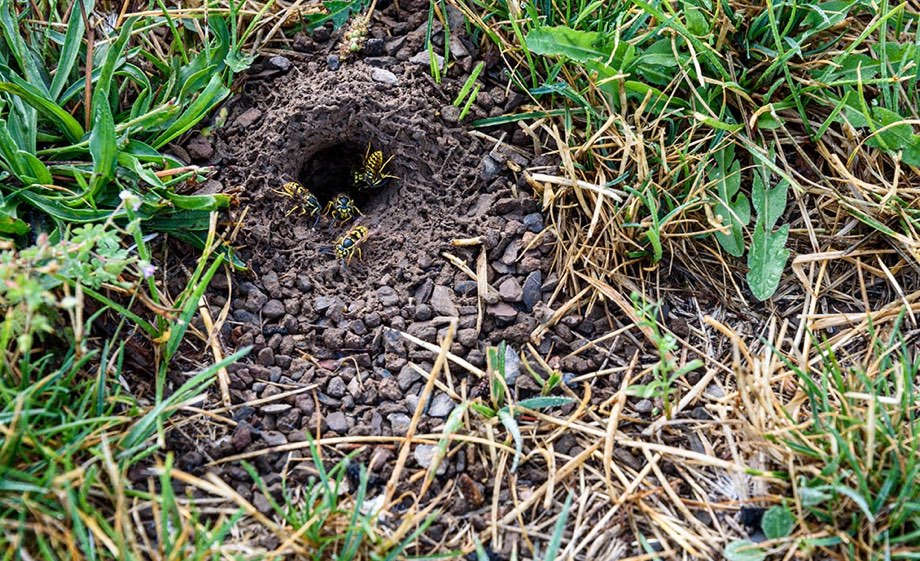
Nest is a closed paper ball or underground — not open comb. Aggressive scavengers: they show up at the trash, the soda, the BBQ. A ground nest shows steady two-way traffic in and out of one hole.
Does it matter?
Yes. They sting readily and repeatedly and defend the nest in numbers. The one stinging insect that’s a genuine amenity hazard.
Resolve / escalate?
Escalates hard mid-to-late summer; colonies get large. Dies off in winter — but that’s too late to wait.
DIY or pro?
Pro. You can’t sweep a nest that’s underground or inside a wall void, and provoking one is how people get hurt. This is the rare case where treating the nest beats everything.
Protected?
No.
Threshold
Any active nest in a high-traffic common area = act now, professionally.
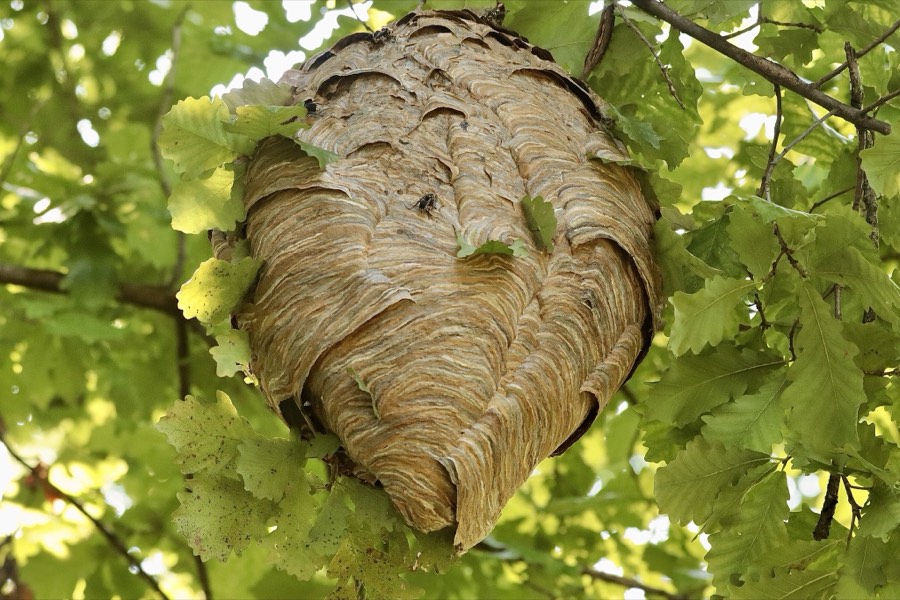
Bald-Faced HornetsDolichovespula maculata — a yellowjacket relative, not a true hornet
Act on itLicensed pro
What it is
The big gray “football” nest hanging in a tree, on a soffit, or under an overhang — a fully enclosed papery envelope. Black-and-white insect, larger than a yellowjacket.
Does it matter?
Yes, when it’s near people. They defend that enclosed nest aggressively.
Resolve / escalate?
Grows all summer; abandoned and dead by winter. Old nests are not reused.
DIY or pro?
Pro if it’s near a walkway, amenity, or entrance. A high, out-of-the-way nest can often just be left to die off in fall.
Protected?
No.
Threshold
Within reach of residents or a high-traffic path = handle it. Out of the way and high up = leave it.
Sand Wasps & Other Solitary DiggersBembix and kin — also listed in §2, Burrows & Holes
Leave itDIY
What it is
Solitary, ground-nesting wasps that dig in bare, dry, sandy soil. You’ll see individual wasps coming and going from small holes — sometimes several in a sandy patch — not the heavy single-nest traffic of a yellowjacket.
Does it matter?
Almost never. They’re solitary and not aggressive — they’re focused on digging and hunting, not defending a colony. Mostly a scare and a cosmetic turf issue. This is the one residents panic over that you can talk them down from.
Resolve / escalate?
Seasonal and self-limiting — solitary, not a growing colony. Gone by late summer.
DIY or pro?
Usually leave alone. If they’re colonizing a high-use sandy area, the fix is cultural, not chemical: they want bare, dry, thin soil, so thicker turf and better irrigation pushes them out.
Protected?
No.
Threshold
Rarely crosses one. Key confusion to resolve: a digger hole gets mistaken for a vole burrow — a soil mound with a single wasp working it is a wasp, not a rodent (full burrow ID in §2).
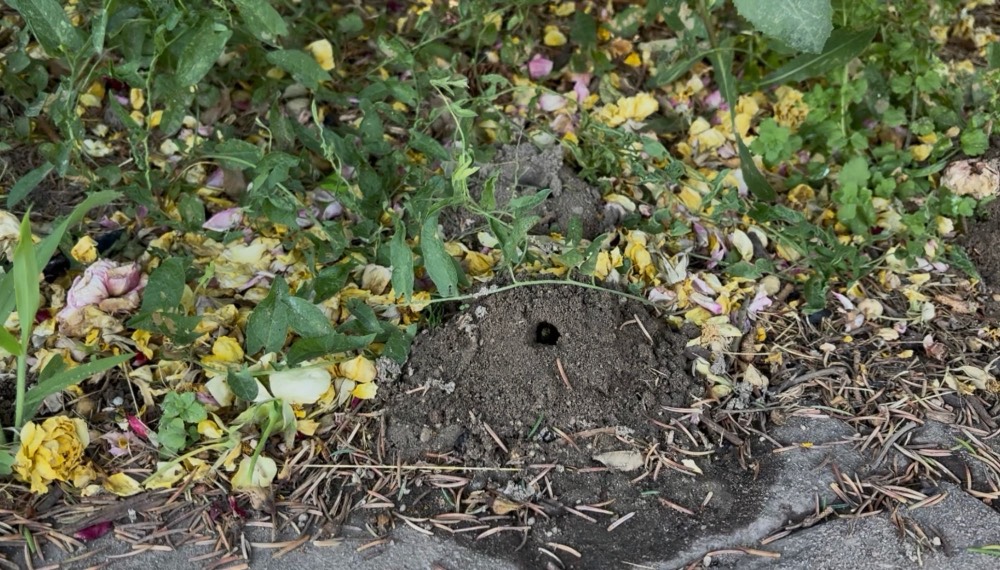
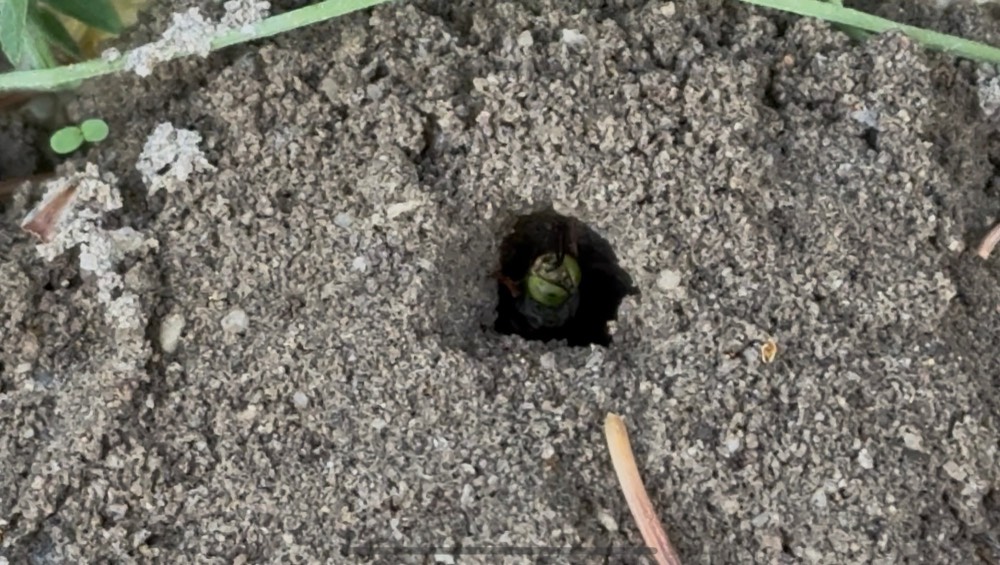
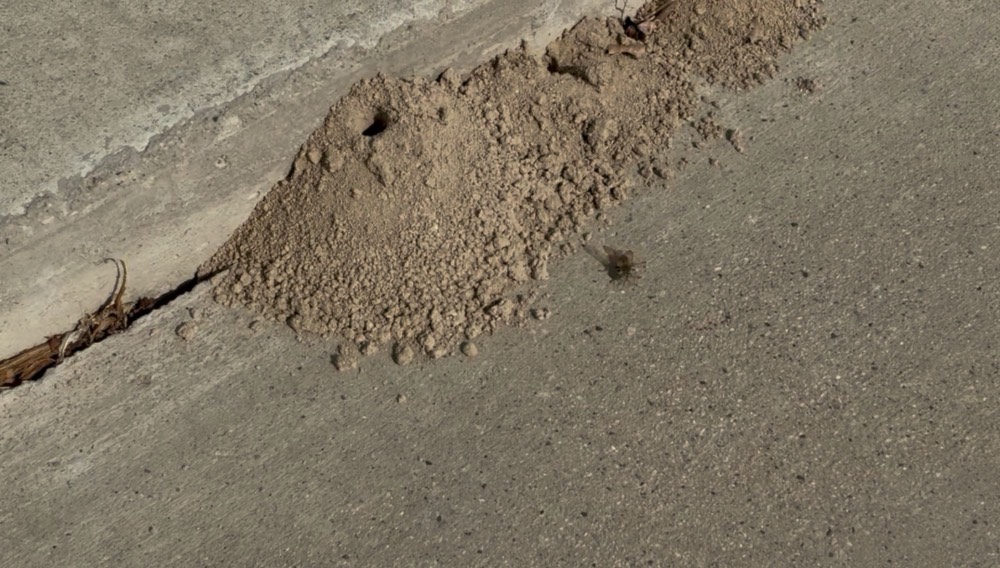
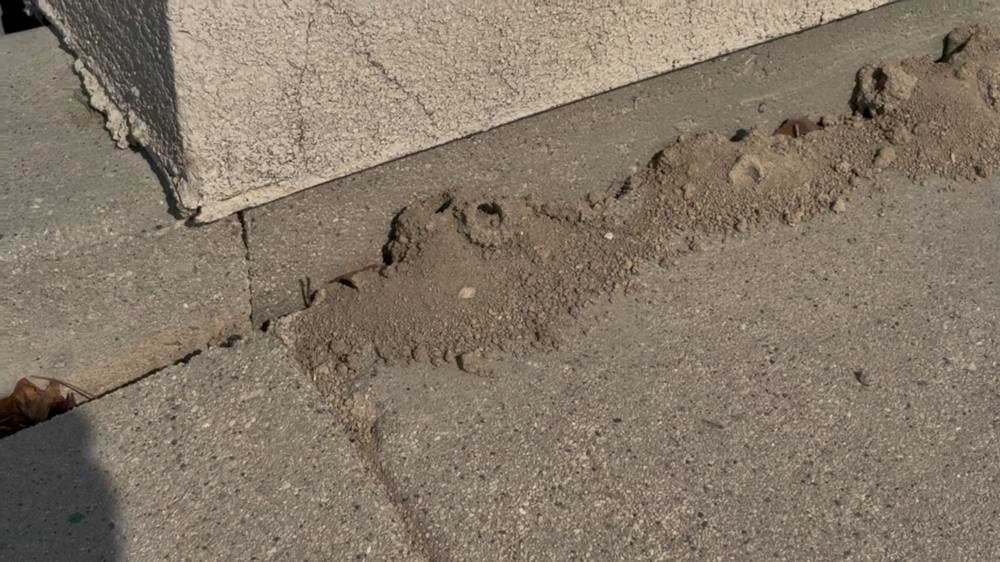
Sand wasp diggings — a wasp at the hole, not a rodent
Mound, wasp at the hole
One wasp working the hole
Tailing along a crack
Diggings along a foundation
The tell is the wasp. A small hole in bare, dry soil with a single wasp coming and going is a harmless sand wasp, not a rodent — the read that separates it from a vole.Photos: Falcon Pest Control.
Mud DaubersSceliphron / organ-pipe daubers
Leave itDIY
What it is
Solitary wasps that build those hard mud tubes on walls, eaves, and under overhangs. Long, thin-waisted, often metallic.
Does it matter?
No. They almost never sting — they’re not defending a colony. They’re actually spider hunters. Pure cosmetic nuisance (the mud marks).
Resolve / escalate?
Each female works alone; numbers stay low. Not a building problem.
DIY or pro?
DIY. Scrape the dried tubes off and repaint if needed. No spray necessary.
Protected?
No.
Threshold
It’s an appearance complaint, never a safety one.
HoneybeesApis mellifera — the one stinging insect you don’t exterminate
Watch itRelocate, don’t kill
What it is
Fuzzy, amber-brown, not glossy. A spring/early-summer swarm is a temporary cluster (often on a branch) that usually moves on within a day or two. A colony established in a wall or soffit is a longer-term issue.
Does it matter?
Only if it’s in a high-traffic spot. Honeybees are valuable pollinators and shouldn’t be sprayed — the Utah norm is relocation by a beekeeper.
DIY or pro?
Call a local beekeeper or removal service for a swarm or an established colony — many collect swarms free. Don’t treat them as wasps.
Threshold
A passing swarm: wait a day. A colony living in a structure: get it removed before it establishes comb.
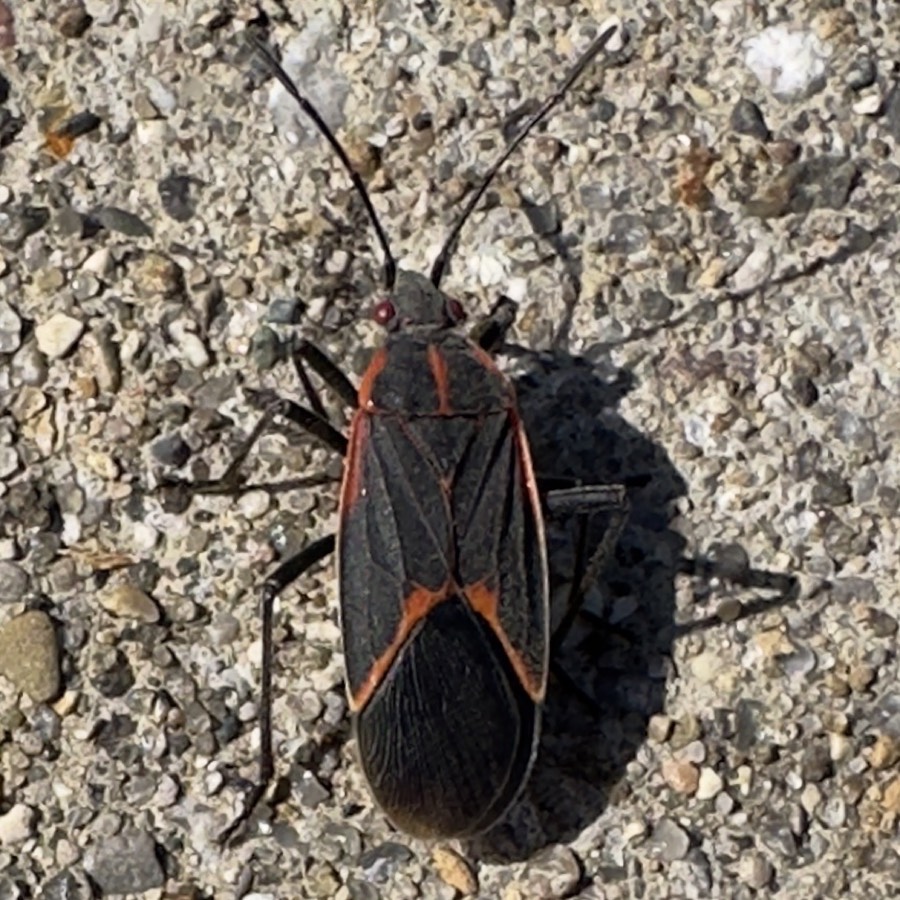
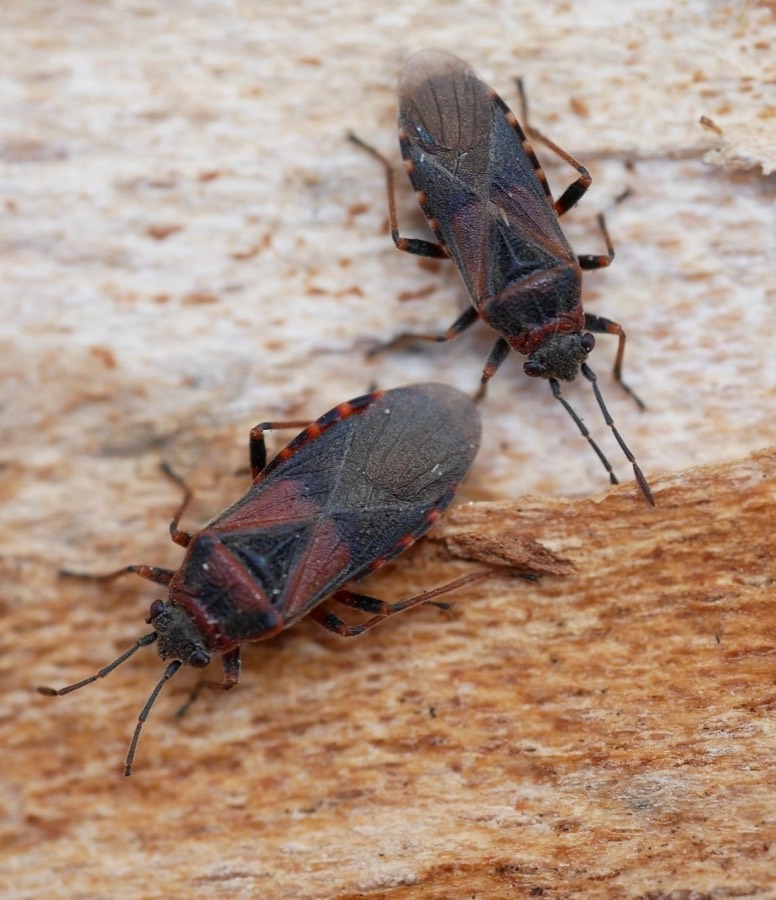
Boxelder Bugs & Elm Seed BugsBoisea trivittata · Arocatus melanocephalus — the Wasatch nuisance invaders
Leave itDIY
What it is
Boxelder bug: black with red-orange lines, swarms warm south/west walls in fall. Elm seed bug: smaller, brownish, peaks early-to-mid summer, gives off an odor when crushed. Both cluster on and around buildings in big numbers.
Does it matter?
No. They don’t bite, sting, damage anything, or breed indoors. Pure annoyance. The whole message: don’t panic, and don’t fog the building.
Resolve / escalate?
Seasonal pulses tied to host trees (elm, boxelder/maple) and the weather. Numbers drop on their own; they just look alarming while present.
DIY or pro?
DIY. Vacuum the ones inside; seal entry points (the real fix). The only place treatment earns its keep is an exterior perimeter band — never an interior or whole-tree spray.
Protected?
No.
Threshold
It’s a comfort/volume complaint, never a health or damage one.
Myth to kill on the spot“Murder hornets” are not here. The northern giant hornet was only ever found in the Pacific Northwest and was declared eradicated. There are no established giant hornets in Utah. The big intimidating ones residents photograph here are almost always bald-faced hornets or, occasionally, a sand wasp — alarming, not exotic.
2 Bugs, Birds & Burrows
Burrows & Holes
Read the hole — it tells you what’s living in your lawn.
Half the “what’s digging up the common area” calls are solved by looking at the opening: its size, whether there’s a soil mound, where the mound sits, and what kind of traffic it shows.
Pocket Gopherthe lawn-wrecker — also a rodent (§3)
Watch itLicensed pro
The hole
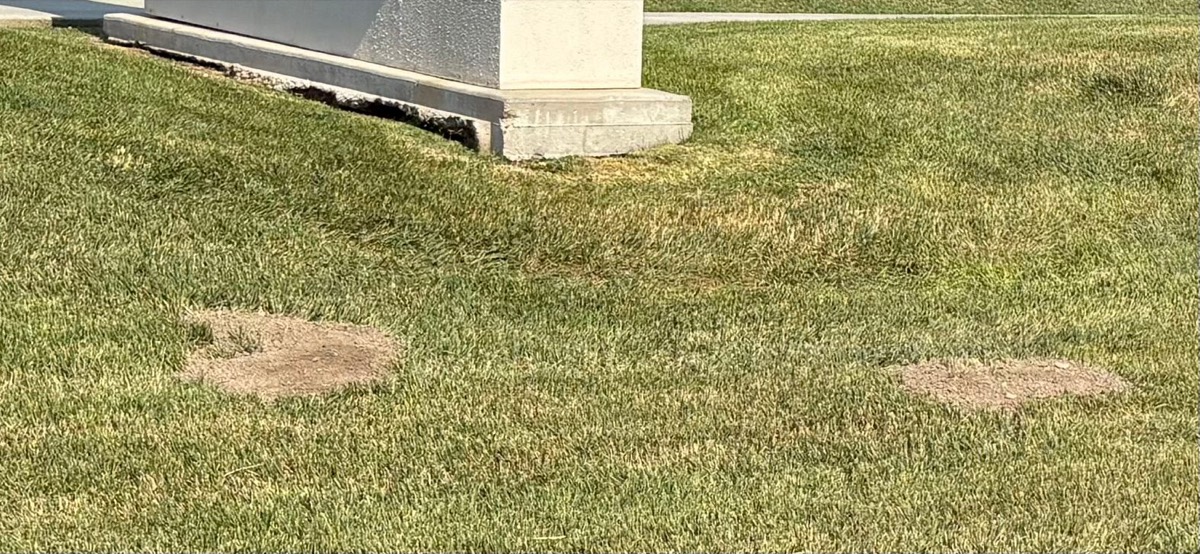
Fan- or horseshoe-shaped soil mounds with the hole plugged off to one side. No open hole most of the time — they backfill. Mounds appear in a line as the tunnel extends.
Does it matter?
Yes, for turf and roots. Gophers chew irrigation lines and plant roots and leave mounds that wreck mowing and aesthetics.
Resolve / escalate?
Escalates — one gopher tunnels continuously and more move in. Won’t self-resolve.
DIY or pro?
Trapping and baiting are the control methods; baiting is licensed/RUP territory on common property. This is core pest-control work, not a sweep-it DIY.
Protected?
No — legally controllable in Salt Lake County at any time. Utah Admin. Code R657-3b-9(7).
Threshold
Fresh mounds spreading across common turf = put it on a program before the tunnel network and the irrigation damage grow.
Gopher mounds. Fresh soil pushed up across the turf, the burrow plugged off to one side with no open hole and no surface runways. Fresh mounds spreading across common turf are the cue to put it on a program.Photo: Falcon Pest Control.
VoleMicrotus — “meadow mouse”; also a rodent (§3)
Watch itDIY-able
The hole
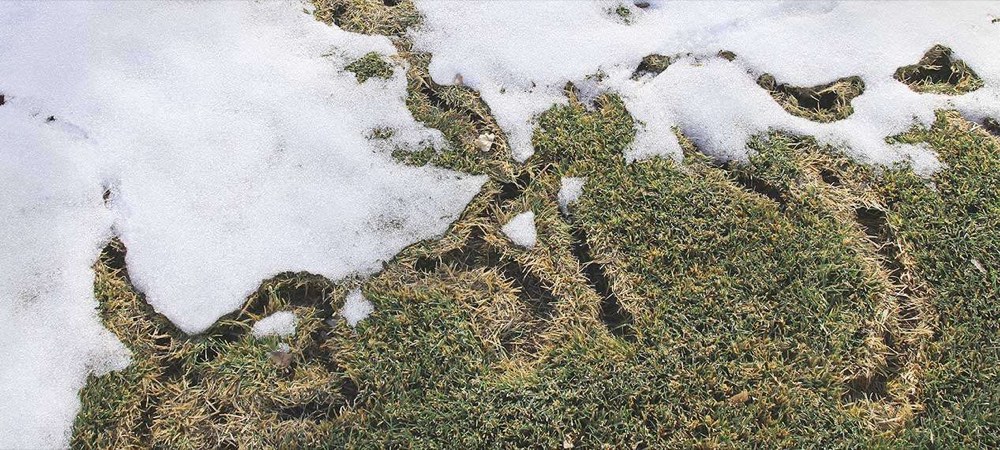
Small (~1½″) open holes with no soil mound, connected by surface runways — little worn paths in the grass, most obvious right after snowmelt. That snaking-trail-with-clean-holes look is the giveaway.
Does it matter?
Yes, for landscaping. Voles girdle and gnaw roots, bark, bulbs, and groundcover, and the runways scar lawns.
Resolve / escalate?
Populations boom fast — especially under snow cover and dense groundcover. Damage shows up all at once in spring.
DIY or pro?
A manager can legally trap. Your peanut-butter snap trap set right at a runway or hole works — voles will come out to it. Reducing dense mulch/groundcover near buildings removes the cover they need. A persistent or large infestation is a program.
Protected?
No — a nongame mammal, controllable in Salt Lake County. Utah Admin. Code R657-19; R657-3b-9.
Threshold
Runways spreading through common landscaping, or repeat plant damage, = move from spot-trapping to a managed program.
Vole surface runways at snowmelt
Vole runways. Small clean holes with no soil mound, joined by worn surface paths in the grass, clearest right after snowmelt.Photos: Falcon Pest Control, Wasatch Front.
Sand Wasp Burrowcross-reference — full entry in §1
Leave itDIY
The hole
Small holes in bare, dry, sandy soil with a flying insect coming and going — not a mammal. This is the one that gets misread as a vole burrow. If you see a wasp working the hole, it’s a sand wasp, and it’s harmless.
What to do
Leave it, or improve the turf so the soil isn’t bare and dry. Full details in §1, Stinging & Flying.
Yellow-Bellied MarmotMarmota flaviventris — mostly a bench/foothill issue
Watch itLicensed pro
The hole
Large burrows (much bigger than a ground squirrel’s) under rock piles, decks, sheds, retaining walls, and slopes. The animal is big — house-cat-sized. Mostly a concern for foothill / bench-adjacent communities, not the valley floor.
Does it matter?
Yes when burrows undermine structures, decks, or walls, or chew on landscaping and equipment.
DIY or pro?
Bigger than a DIY trap. This is a wildlife/pest-control job — exclusion (sealing under structures) plus professional removal.
Threshold
Active burrowing under any structure or retaining wall = handle it before the undermining gets expensive.
The 10-second burrow readMound + plugged hole = gopher. Clean hole + surface runways, no mound = vole. Hole with a wasp working it = sand wasp. Giant hole under a structure on the bench = marmot.
3 Rodents
Mice & Rats
There are only two control realities: trap it, or bait it.
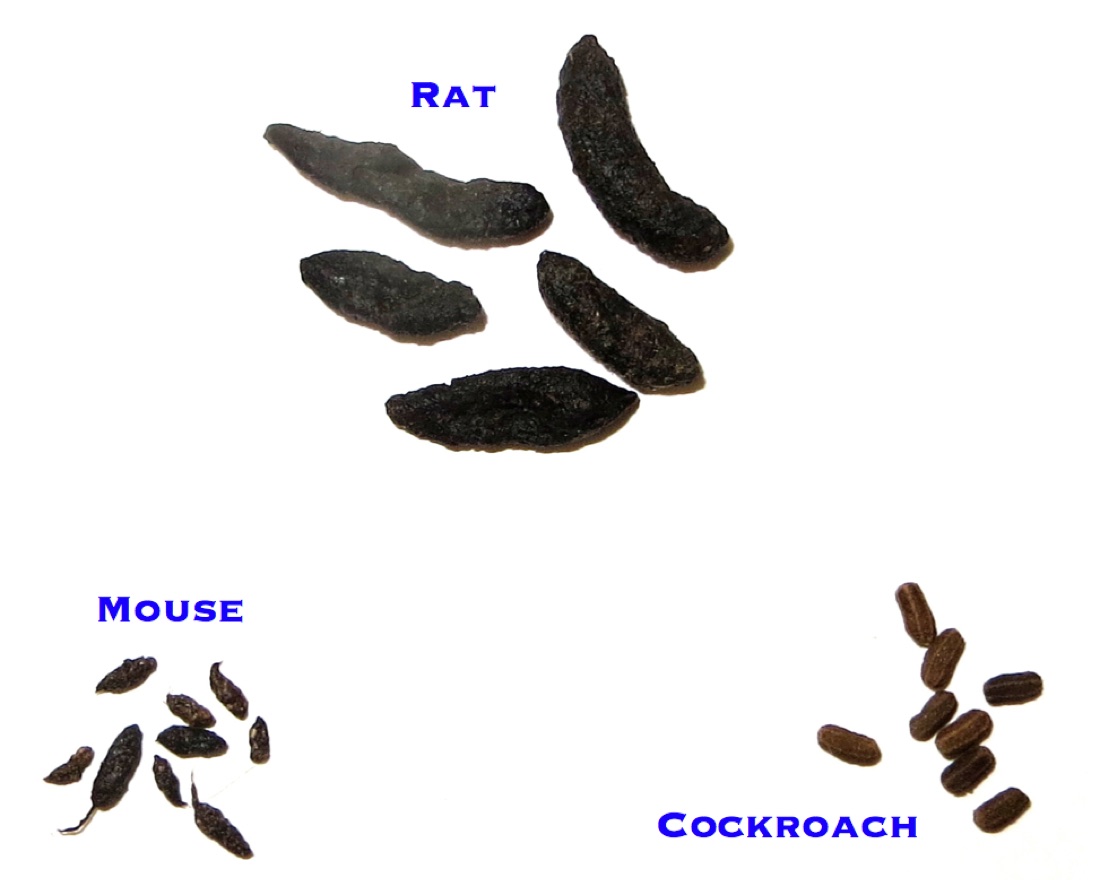
Tell the maker by the droppingSize and shape name the maker. Rat droppings are the largest, up to about three-quarters of an inch; house-mouse droppings are small and rice-grain sized, under a quarter inch; cockroach droppings are tiny, ridged, and blunt-ended. (Among rats, Norway droppings have blunt ends and roof-rat droppings are pointed — see the entries below.)Image provided by Falcon Pest Control.
House MouseMus musculus
Watch itDIY-able
What it is
Small, gray-brown, big ears, slender tail. Droppings are rice-grain sized (<¼″), scattered. The most common indoor rodent in valley buildings.
Does it matter?
Yes once inside — they contaminate food and surfaces, gnaw, and breed quickly. A health and damage issue, not just an ick factor.
Resolve / escalate?
Escalates — a few become many in weeks. One mouse means set traps now.
DIY or pro?
A manager can legally set snap traps and consumer bait stations. The lasting fix is exclusion: seal gaps down to ¼″ (a mouse fits through a hole the size of a dime). Recurring or building-wide = a program.
Protected?
No.
Threshold
Any evidence in a clubhouse, gym, or common kitchen = act immediately; those are the high-stakes spots.
Norway RatRattus norvegicus — the burrowing “sewer rat”
Act on itLicensed pro
What it is
Stocky, brown, blunt nose, tail shorter than the body. Burrows along foundations, under slabs, in woodpiles, near dumpsters and water. Droppings ~¾″ with blunt ends.
Does it matter?
Yes — serious. Gnaws wiring (fire risk), undermines structures, and carries disease. A confirmed rat is a bigger problem than a confirmed mouse.
Resolve / escalate?
Escalates and the colony hides — if you see one in daylight, the population is already high.
DIY or pro?
This is professional/program work in a community setting — coordinated baiting in tamper-resistant stations, trapping, exclusion, and sanitation/harborage cleanup together.
Protected?
No.
Threshold
Any confirmed rat in or around common buildings = act now, professionally; rats don’t stay a small problem.
Deer MousePeromyscus — the hantavirus one; treat it differently
Act on itSpecial cleanup
What it is
Bicolored — brown on top, clean white belly and feet, larger eyes than a house mouse. Found in foothill/bench communities and in sheds, garages, storage, and outbuildings rather than deep inside occupied units.
Does it matter?
Yes — this is the one that can carry hantavirus, which is rare but serious. The risk is in disturbing droppings/nests in enclosed, unventilated spaces.
DIY or pro?
Control is the same trapping — but cleanup is the part to get right. Never sweep or vacuum droppings in an enclosed space. Air the space out, then wet it down with a 1:10 bleach solution before cleanup, and use proper respiratory protection for heavy contamination. See “When It Becomes a Program” for the cleanup distinction.
Protected?
No — but the cleanup precautions are non-negotiable.
Threshold
Droppings in a closed shed, storage room, or seasonal building = stop and use the wet-cleanup protocol, especially in foothill communities.
The only two control realities — and how to set themTrap it or bait it. That’s the whole menu. A snap trap goes perpendicular to the wall with the trigger end touching it (rodents run along walls), baited with a dab of peanut butter — not a pile. A bait/tamper-resistant station sits flush against a wall or foundation where you see activity. A manager’s legal, no-license trick for voles and mice: put a baited snap trap inside an anchored station — the station is just a tamper-resistant box (anyone can buy one), the snap trap does the work, and pets and kids can’t reach it.
4 Indoor Invaders
Cockroaches & Bed Bugs
The indoor pests where conditions — and shared walls — tell the story.
Utah has three cockroach species. Which one you have tells you why you have it, because each is driven by a different condition.
German CockroachBlattella germanica — the most common, and the real infestation risk
Act on itLicensed pro
What it is
Small (~½″), light brown, two dark stripes behind the head. Lives indoors, tight to kitchens and bathrooms — warmth, food, and moisture. The one that builds true infestations.
What’s driving it?
Hitchhikes in on boxes, groceries, used appliances, and between attached units, then thrives on available food, grease, clutter, and moisture. Its presence points to sanitation, harborage, and a moisture source — and to shared-wall spread in attached housing.
Does it matter?
Yes — reproduces explosively, contaminates food, and triggers allergies/asthma. The species that gets out of hand fastest indoors.
DIY or pro?
Professional. German roaches need a real gel-bait/IPM program plus sanitation; over-the-counter sprays scatter them and make it worse. In attached units, treat the cluster, not one unit.
Threshold
Any confirmed German roach in a unit warrants a professional response — waiting lets it spread through the wall.
Oriental CockroachBlatta orientalis — the “water bug”
Watch itLicensed pro
What it is
Larger (~1″), very dark, almost black, glossy, sluggish. The roach people call a “water bug.”
What’s driving it?
Moisture and cool, damp spaces — floor drains, sump areas, crawlspaces, basements, mulch and damp ground against the foundation. They come up from drains and damp exterior harborage.
Does it matter?
A sanitation/contamination concern, but they don’t explode indoors the way German roaches do. They signal a moisture problem worth fixing.
DIY or pro?
Fix the moisture and harborage first (the real lever); a pro handles the perimeter, drains, and damp entry points.
Threshold
Repeated appearances from drains or basements = address the moisture source, not just the roaches.
American CockroachPeriplaneta americana — the least common here
Watch itLicensed pro
What it is
The big one — reddish-brown, up to ~1½″, can fly short distances. Not very prevalent in Utah homes.
What’s driving it?
Associated with warm, humid, large-volume spaces — sewers, steam tunnels, boiler and mechanical rooms, large commercial kitchens. Usually an entry from drains, sewers, or below rather than a home-breeding problem.
Does it matter?
More of a commercial/mechanical-space and sanitation issue than a residential-unit one.
DIY or pro?
Professional — tie it to the entry route (drains, sewer lines, mechanical spaces) and seal/treat there.
Threshold
Several in a mechanical room or commercial kitchen = trace the entry point.
Bed BugsCimex lectularius — the shared-wall exception
Act on itLicensed pro
What it is
Flat, apple-seed-sized, reddish-brown; hides in mattress seams, headboards, and furniture. Signs: small blood spots and dark fecal specks on bedding, plus bites in lines or clusters.
Does it matter?
Yes in attached housing — this is the one indoor pest where the shared-wall and unit-to-unit question is real, because they travel along adjoining units and through furniture and belongings. (Most pest calls in single-family neighborhoods are the resident’s; bed bugs in townhomes/condos can become a building conversation.)
Resolve / escalate?
Does not resolve on its own and spreads if untreated. Treating only the complaining unit usually fails when adjoining units aren’t checked.
DIY or pro?
Professional. Retail sprays and “bug bombs” scatter them and entrench the problem. A BCE can determine whether it’s isolated or building-wide and which adjoining units actually need inspection.
Protected?
No.
Threshold
A confirmed report in an attached unit = inspect the neighbors (beside, above, below), not just the one unit.
5 Spiders
Which One Is Actually a Concern
In Utah, almost all of them are “just a spider.”
Kill this myth firstThere are no brown recluses in Utah. The brown recluse’s range doesn’t reach here, and decades of so-called sightings have not established a population. When a resident is sure they have one, they almost certainly don’t. This is the single most useful thing you can tell a worried community.
Western Black WidowLatrodectus hesperus — the one that warrants real respect
Act on itDIY-able
What it is
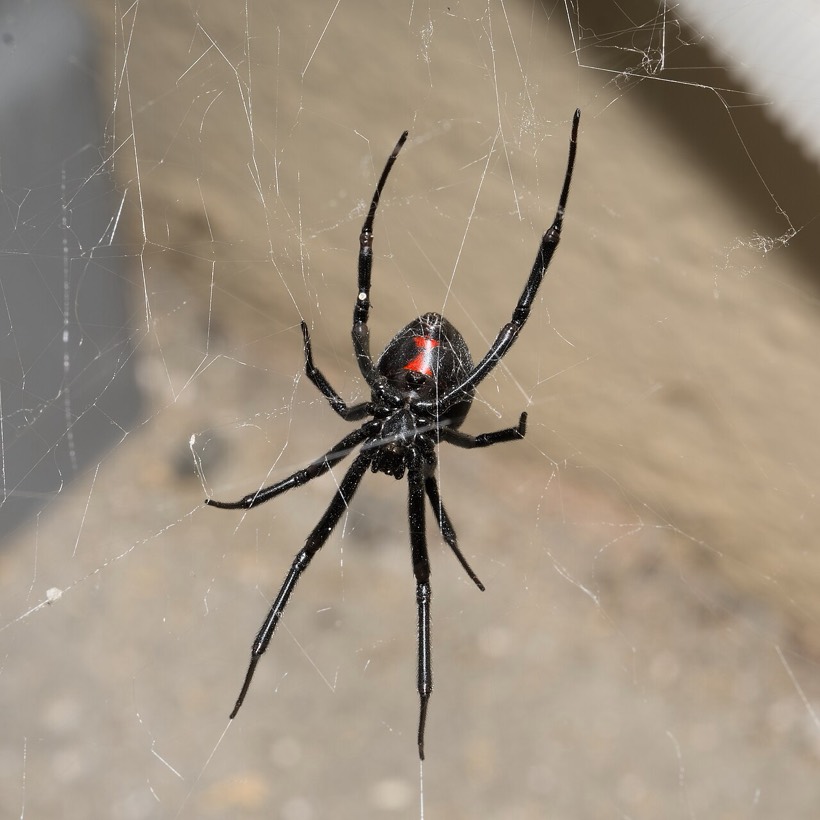
Glossy black, round abdomen, red hourglass underneath. Builds messy, strong, irregular webs in dark, undisturbed spots — under benches and railings, in meter boxes, window wells, woodpiles, playground undersides, and (notably) inside ground bait stations and utility boxes.
Does it matter?
Yes — the one Utah spider whose bite can be medically significant. They’re shy, not aggressive, but the risk is real where people reach into hidden spaces.
DIY or pro?
Knock down webs and egg sacs and reduce harborage and clutter in common areas; a manager can do that. In amenity areas where residents reach blindly (under bleachers, in boxes), a treatment program is worth it.
Protected?
No.
Threshold
Widows in spots people reach into — playground equipment, seating, electrical/irrigation boxes — = act.
The one that warrants respect. Glossy black with a red hourglass on the underside of the abdomen, in its messy, irregular web. Everything else in Utah is, functionally, just a spider.Image provided by Falcon Pest Control.
Hobo Spider & Other “Scary” SpidersEratigena agrestis, wolf spiders, etc.
Leave itDIY
What it is
The hobo spider is a brown funnel-web builder common in window wells, basements, and ground level. Wolf spiders are large, fast, and hairy — the ones that make residents jump. Big and unsettling, but not the black widow.
Does it matter?
Low. A hobo bite is, at most, a painful local reaction — not the hospital-grade concern it was once rumored to be, and not a black widow. Wolf spiders are essentially harmless and are actually pest predators.
DIY or pro?
Knock down webs, reduce clutter and outdoor lighting that draws their insect prey, and seal entry points. Rarely needs treatment.
Protected?
No.
Threshold
Mostly a comfort issue. The job here is reassurance and a vacuum, not a spray.
The whole spider message in one lineIf it’s a glossy black spider with a red hourglass in a spot someone reaches into, respect it. Everything else in Utah is, functionally, just a spider.
6 Wood-Destroying Organisms
What Actually Eats the Building
Only one of these does real structural damage. Know which.
Subterranean TermitesReticulitermes — the real structural threat
Act on itLicensed pro
What it is
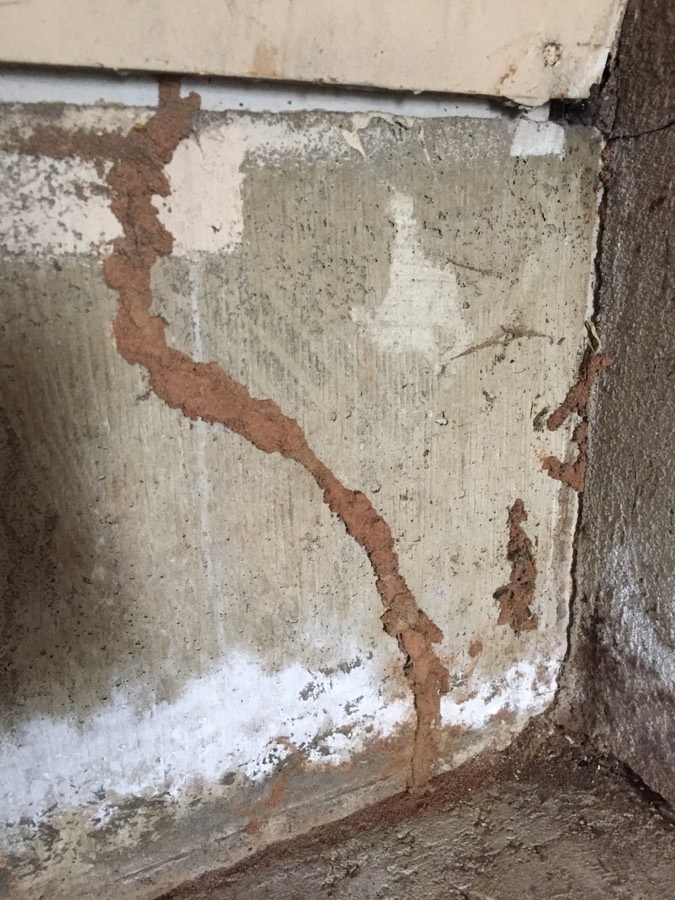
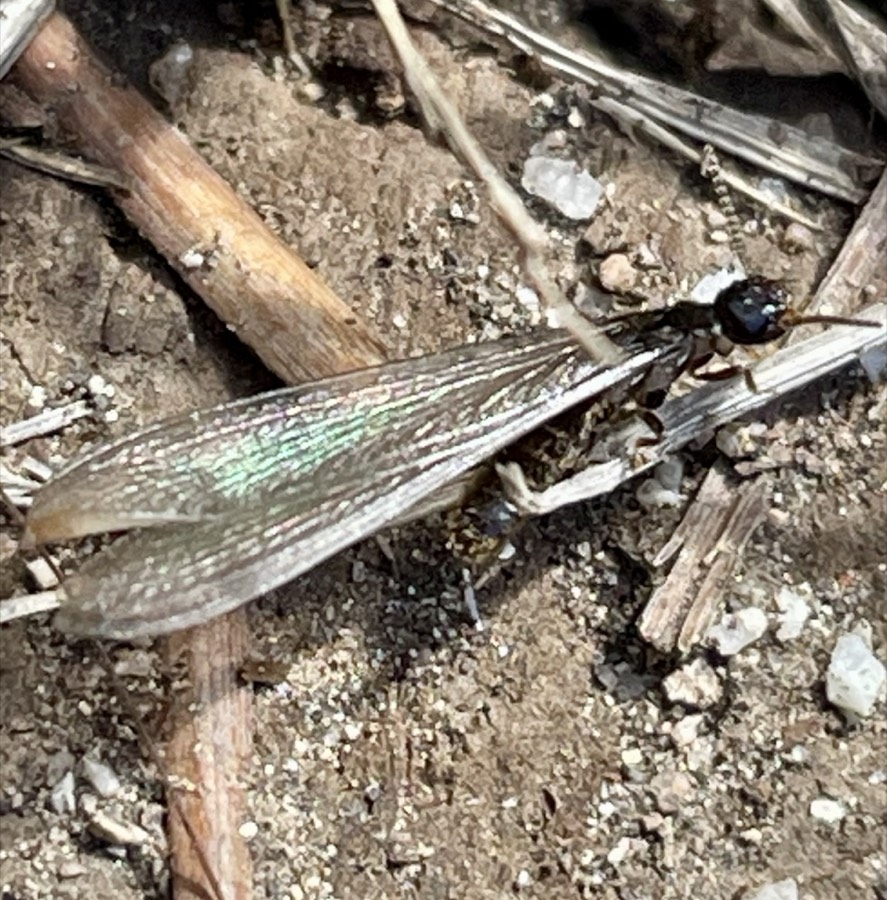
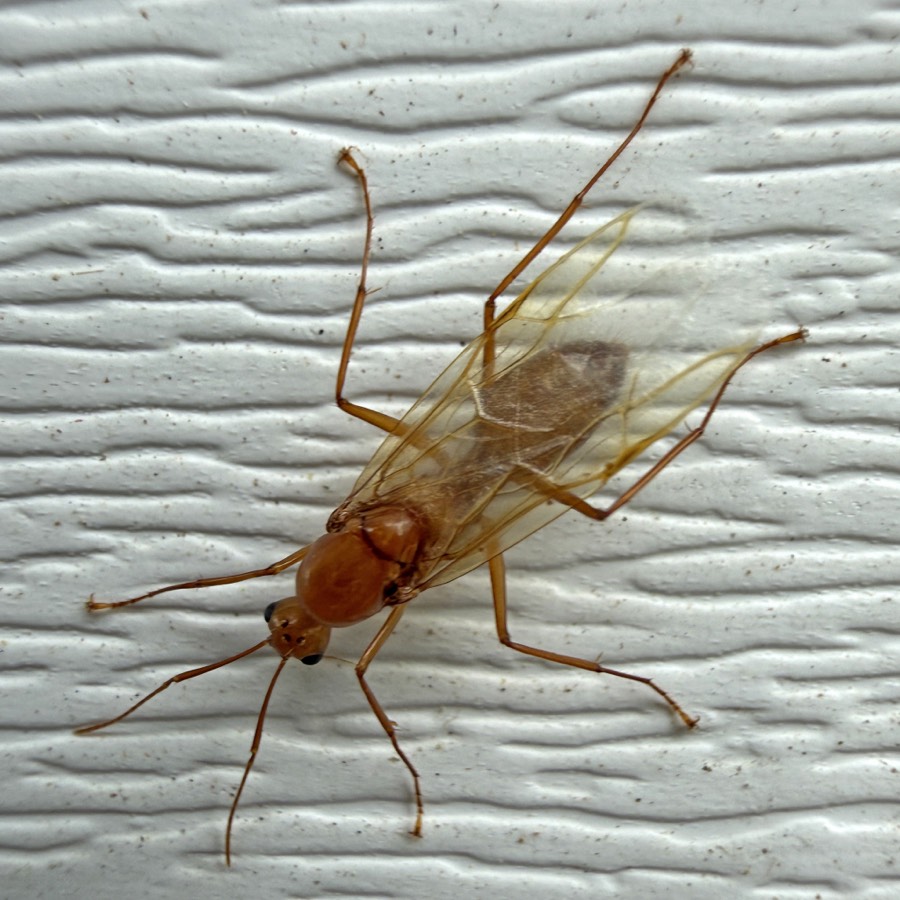
Pale, soft-bodied, live underground and come up through soil contact. Tell-tale signs: pencil-width mud tubes on foundations and crawlspace walls, and a spring swarm of dark winged termites (often mistaken for flying ants — termites have straight bodies, equal-length wings, and straight antennae). Salt Lake County is termite country — it is not in Utah’s termite-exception areas.
Does it matter?
Yes — this is the one that quietly destroys structural wood. The serious WDO call.
Resolve / escalate?
Escalates silently — damage accrues out of sight until it’s significant.
DIY or pro?
Professional, always — soil treatment and/or baiting by a licensed applicator, plus reducing wood-to-soil contact and moisture against the structure.
Threshold
Any mud tubes, a swarm, or hollow/damaged structural wood = professional inspection now.
Carpenter AntsCamponotus — a moisture signal as much as a pest; also see ants below
Watch itLicensed pro
What it is
Large (often ½″) black or dark ants. They don’t eat wood — they excavate galleries in wood that’s already wet or rotting, leaving sawdust-like shavings (“frass”) below. Finding them usually means there’s a moisture problem.
Does it matter?
Moderate — they enlarge damage in compromised wood, but the underlying issue is the moisture. Far slower and less destructive than termites.
DIY or pro?
Fix the water source (the real fix — leak, gutter, grade) and have a pro locate and treat the nest. Surface spraying the trails alone won’t solve it.
Threshold
Big ants indoors plus frass or damp wood = find the moisture and the nest.
Nuisance Antsodorous house ants, pavement ants, etc. — no wood damage
Leave itDIY-able
What it is
The small ants trailing across counters, patios, and sidewalks. They do no structural damage. The most common is the odorous house ant (smells faintly of coconut/rot when crushed).
Does it matter?
No real harm — a contamination nuisance indoors and an appearance issue outdoors.
DIY or pro?
Wipe trails, remove food and moisture, and use consumer ant baits (let them carry it back — don’t spray the trail, which splinters the colony). Persistent indoor trails in common areas can go to a pro.
Protected?
No.
Threshold
It’s a sanitation/appearance call. The key is just knowing it’s not termites or carpenter ants.
The WDO bottom lineTermites destroy sound wood — serious. Carpenter ants exploit wet wood — fix the water. Regular ants damage nothing — just keep them out of the kitchen.
7 Birds
The Three You Can Act On — and Everything You Can’t
Get this one wrong and it’s a federal and a state problem.
Almost every bird in Utah is protected. Only three common pest birds are exempt — and even those come with rules. The safe instinct: assume a bird is protected until you’ve confirmed it’s one of the three.
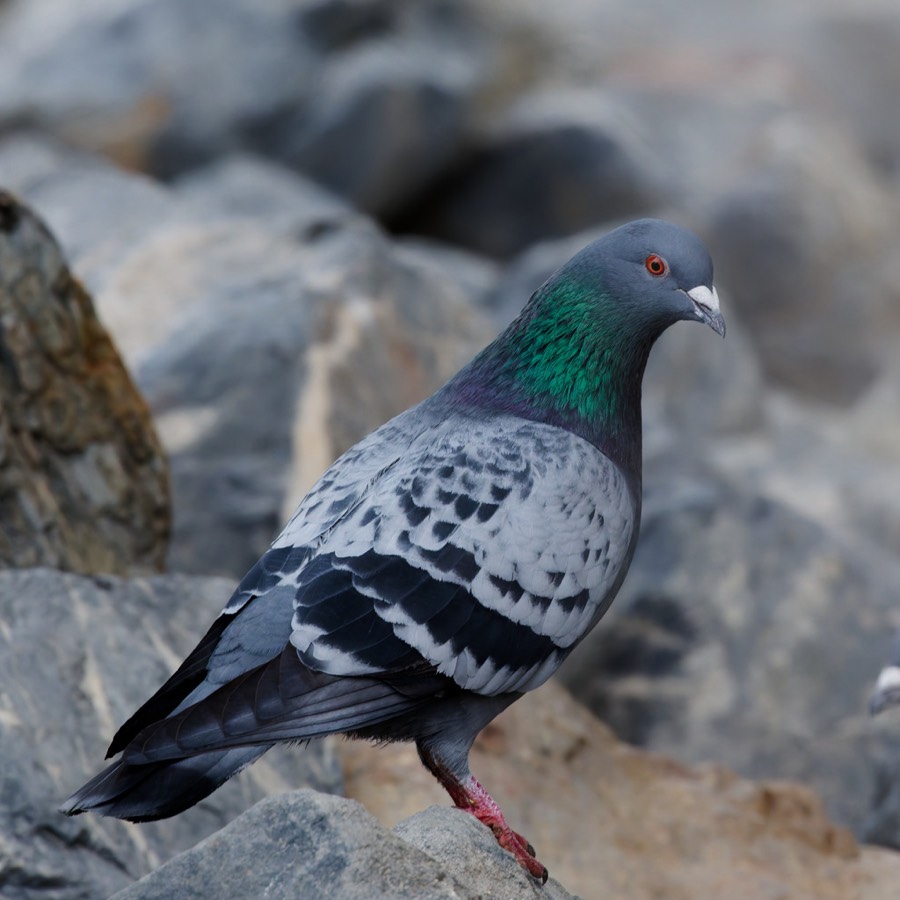
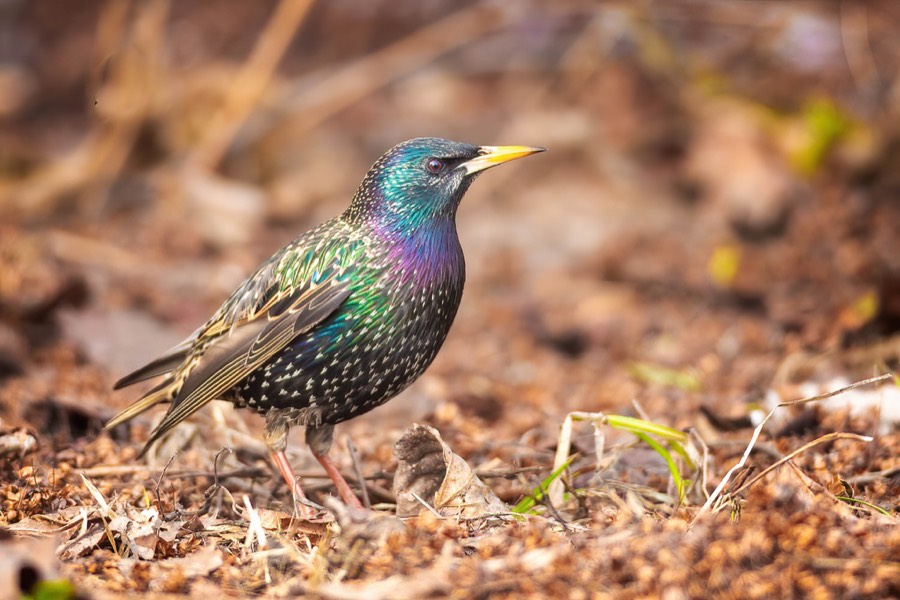
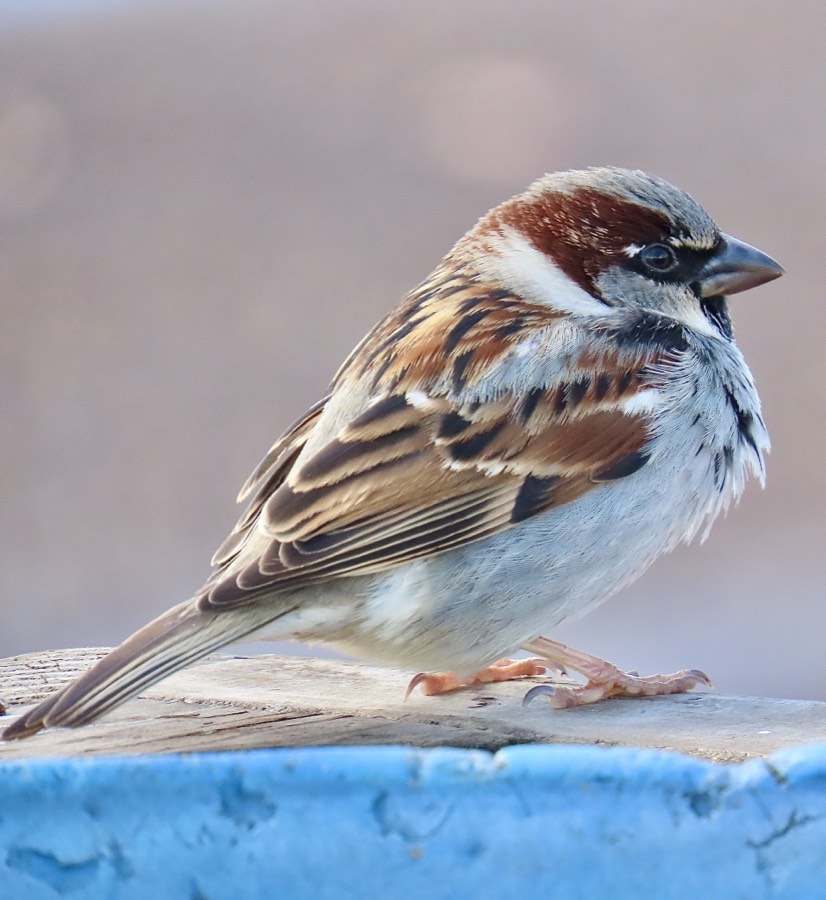
Pigeon · European Starling · House Sparrowthe unprotected, non-native pest birds
Watch itLicensed pro
What they are
The three non-native birds that foul buildings, ledges, signage, and amenities with droppings and nesting. (Eurasian collared-dove is also treated as a nuisance, non-protected species in Utah.)
Does it matter?
Yes when droppings accumulate on walkways, equipment, or entrances — an appearance, slip, and sanitation issue, and a corrosion issue on metal and stone over time.
The legal reality
These three can be controlled in Utah without a state certificate or federal permit when they’re damaging property or creating a nuisance — but non-lethal methods must be tried first, all local/state/federal laws followed, and control done without poison, bait, or explosives.Utah Admin. Code R657-3b-9; R657-3-7.
DIY or pro?
The durable, lawful answer is exclusion and deterrence — netting, spikes, ledge modification, and reproductive baiting programs (e.g., OvoControl) — which is professional work. The legal “non-lethal first” requirement happens to point exactly where the real solution is anyway.
Threshold
Droppings fouling a walkway, entry, or amenity, or persistent roosting/nesting on a building = move to an exclusion program.
Every native bird — and that’s nearly all of them. Swallows are the trap that catches managers: those mud nests under eaves and on commercial walls are protected, and once there are eggs or young in an active nest you cannot remove it.
The legal reality
Protected under the federal Migratory Bird Treaty Act and Utah law. Disturbing an active nest, eggs, or young can be a serious violation. 50 CFR; Utah Admin. Code R657-3.
What to do
Prevention is everything and timing is everything: exclude before nesting season so birds never build, by netting or blocking the eaves. Once a nest is active, leave it until the young have fledged, then remove and exclude. For raptors, geese, or any native species causing a real conflict, that’s a permitted/DWR matter — not a DIY removal.
Threshold
If it’s not a pigeon, starling, or house sparrow, treat it as protected and get guidance before touching a nest.
Bird Remediation — What Works, What’s a Waste
Exclusion (netting, spikes, wire, ledge angling)
The durable fix. Physically denies birds the surface they want — quality netting can last on the order of ten years. The gold standard — but only if installed correctly. Tight, fully sealed edges are everything; loose or oversized edges let birds in behind the net where they get trapped, which is a worse problem than you started with and has to be torn out and redone. Needs occasional maintenance (clearing debris and old nests). Highest upfront cost, lowest cost over time.
The category that disappoints. Birds habituate — they quickly learn the plastic owl and the noise are harmless and come right back. Effectiveness fades and varies by species. Fine as a short-term supplement; never a standalone solution. Deterrents move birds around — they don’t solve the problem.
Trapping
Right tool, wrong target — usually. Works for resident birds that stay year-round (some sparrows and starlings); useless against mobile pigeon flocks that simply reinvade. For a pigeon problem, trapping is the wrong tool.
Lethal / toxicants
Restricted, and rarely the answer. Restricted-use, licensed-and-permitted only, with real public-perception problems — and Utah law requires non-lethal methods first anyway. Not a manager’s path.
The takeaway
Exclude first and exclude right; use birth control where you can tolerate some birds in the meantime; treat deterrents as temporary; don’t bother trapping a flock.
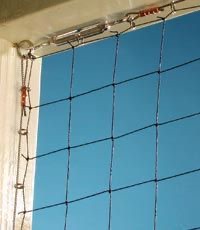
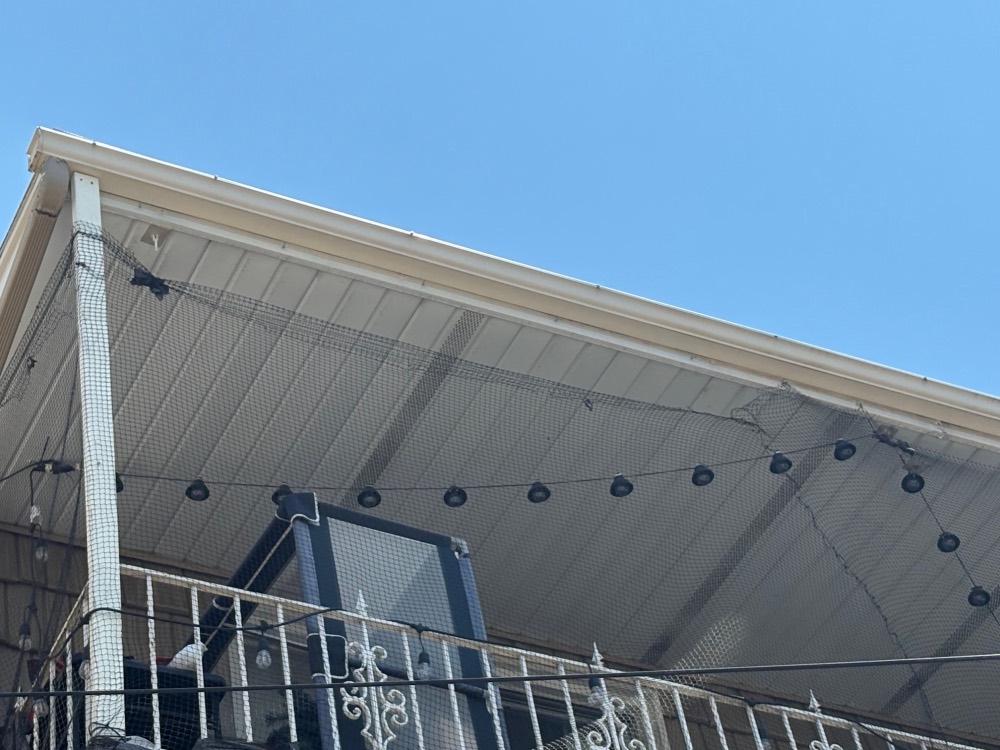
Bird netting: done right vs done wrong
Done right · tight, fully sealed edges
Done wrong · loose edges trap birds
Exclusion only works if the edges are tight. Installed right, netting is an even, taut grid with fully sealed edges. Loose or oversized edges let birds in behind the net where they get trapped — a worse problem than you started with.Photos: Falcon Pest Control.
Bird Birth ControlOvoControl — the source-level option
Managed program
What it is
An EPA-registered bird contraceptive (active ingredient nicarbazin), delivered as a bait the flock eats on a schedule. Not a poison — its acute toxicity is comparable to table sugar, and the effect reverses if baiting stops.
How it works
Treated birds lay eggs that don’t hatch, so the flock shrinks gradually through natural attrition instead of being killed.
Why it’s considered effective
It cuts a pigeon flock by roughly half over a year — a documented field trial in San Diego saw about a 53% decline over twelve months. Endorsed by humane and conservation groups (the Humane Society, ASPCA, Audubon, the Peregrine Fund) because it addresses the source — reproduction — rather than chasing symptoms.
The realities
It’s slow (you’re waiting on attrition, not an overnight drop), and it only works with sustained, consistent daily baiting through the breeding season — miss days and it underperforms. It fits only where some birds can be tolerated in the meantime, and it pairs best with exclusion: netting protects the priority surfaces while birth control brings the whole flock down.
The expensive bird mistakeKnocking down an active swallow or other native nest — or letting a landscaper do it — is a violation, not a cleanup. The entire game with protected birds is excluding them before they nest. Once eggs are present, your options narrow to waiting and then preventing next year.
8 Bats & Wildlife
When It’s Not a Pest — It’s Wildlife
Pest control, animal control, or DWR? Some of these you legally cannot kill.
Batsall 18 Utah species — protected, and timing-restricted
Protected — cannot killPermitted operator
What it is
A single bat that blunders into a living space, or a maternity colony roosting in an attic or soffit (most common in older and even newer construction through ridge vents, soffit gaps, and flashing). Little brown and big brown bats are the usual valley species.
The legal reality
Every Utah bat species is protected — it is illegal to kill them. A colony in a structure must be handled by exclusion (one-way devices that let bats out but not back in), then sealing — never poison. Utah DWR.
The timing trap
No exclusion during maternity season (May through August, per CDC and DWR). Sealing then traps flightless pups inside, which is both illegal and creates a far worse problem (dead bats in the wall, and adults pushing into living space to reach young). Exclusion happens before May or from September, once the pups can fly.
DIY or pro?
A single bat in a room: don’t release it until you’ve talked with public health (CDC). Keep people and pets out, close the door, and call animal control or the local health department, which can capture it for rabies testing; bat bites can be too small to notice. Never handle a bat bare-handed. A colony requires a DWR-permitted wildlife-control operator, and DWR coordinates the timing.
Threshold
One bat indoors = call public health before anyone releases it. A colony, guano accumulation, or repeat entries = permitted operator, on DWR’s schedule.
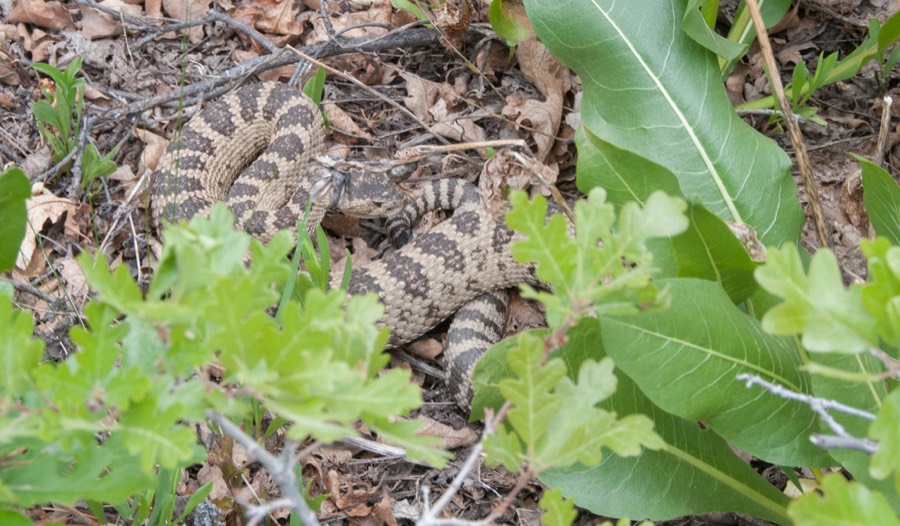
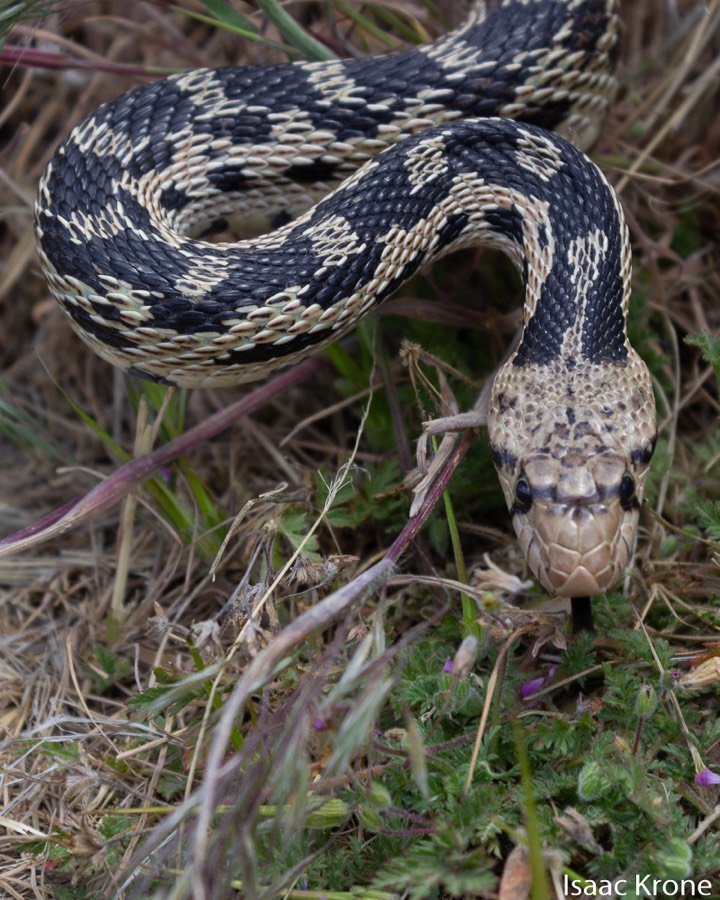
Snakes (incl. Rattlesnakes)Great Basin rattlesnake vs. the harmless gophersnake
Protected — do not killDWR / relocator
What it is
Most snakes residents see are harmless. The gophersnake (the most common snake in Utah) mimics a rattler — it hisses and vibrates its tail — but has a slender pointed tail (no rattle), a round pupil, and a narrow head. The Great Basin rattlesnake (the only venomous snake on the Wasatch Front) has a broad triangular head, vertical pupils, and a blunt tail tipped with a rattle. Bench and foothill communities see them most.
The legal reality
Rattlesnakes — and native snakes generally — are protected under Utah law; it is illegal to harass or kill one, a class B misdemeanor, except in genuine defense of a person. Utah DWR; protected since 1989.
DIY or pro?
Don’t let residents grab a shovel. For a rattlesnake in a yard, common area, or play area, contact DWR or a licensed snake relocator — they move it to native habitat legally. A harmless gophersnake can simply be left alone or gently encouraged out; it actually keeps rodents down.
Threshold
A rattlesnake in a resident-use area = call a relocator/DWR, mark the spot, keep people and pets back. Don’t kill it — that’s when most bites happen, and it’s illegal.
RaccoonsProcyon lotor — legal to control, illegal to relocate
Watch itWildlife control
What it is
Gets into dumpsters, crawlspaces, attics, and chimneys; tears insulation; raids trash. A wildlife-control problem more than a pest one.
The legal reality
Raccoons can legally be controlled in Utah at any time — but relocating or holding a live raccoon is prohibited (state veterinarian/UDAF jurisdiction). So “trap and release somewhere else” is not a legal option. Utah Admin. Code R657-3b-9(7); R58-14.
Health note
Rabies vector; also carries leptospirosis and the raccoon roundworm (Baylisascaris). Never let residents handle one, and treat droppings as a hazard.
DIY or pro?
Use a licensed wildlife-control operator. The lasting fix is exclusion — secure dumpsters and bins, cap chimneys, and seal crawlspace and attic access.
Threshold
Denning in a structure, or aggressive/daytime behavior (possible illness) = wildlife-control operator now.
Skunksthe rabies-vector digger
Watch itWildlife control
What it is
Dens under decks, sheds, and porches; digs cone-shaped holes in turf hunting grubs; the obvious odor. A nuisance and a health concern more than a structural one.
Health note
A primary rabies carrier in the region — the reason this is a hands-off, professional matter rather than a DIY trapping job.
DIY or pro?
Licensed wildlife-control operator. The durable fix is exclusion: screen and seal under decks/sheds, and address the grub problem that’s drawing them to the lawn.
Threshold
Denning under a structure, or any daytime/disoriented behavior, = professional removal and exclusion.
Pest control vs. animal control vs. DWRPest control handles insects and commensal rodents (mice, rats) and the controllable burrowers (gophers and voles). Wildlife/animal control handles raccoons, skunks, and the bigger mammals — often with legal limits on relocation. DWR governs protected wildlife — bats, native birds, and rattlesnakes — where the answer is exclusion, permits, or a licensed relocator, never a kill.
Cross-reference
The Licensing Line
What you can legally handle yourself — and where it becomes a licensed job.
This is the question behind half of these entries: “Can I just deal with it?” Here’s the honest, Utah-specific answer.
Always DIY-legal
Mechanical and habitat work needs no license at all, because it isn’t a pesticide application: sweeping down wasp nests, setting snap traps and tamper-resistant stations, sealing and excluding entry points, removing standing water, scraping off mud-dauber tubes, knocking down spider webs, and cutting back the clutter and moisture that pests need.
The consumer-product line
In Utah, only restricted-use pesticides legally require a license to use. General-use, off-the-shelf consumer products are not use-restricted. Utah Admin. Code R68-7-5(3). So a resident treating inside their own home with a store product is within bounds.
Where it becomes licensed
Applying any pesticide “for hire or compensation” makes you a commercial applicator under Utah law — which is exactly what a management company or vendor treating an association’s common property is doing. Utah Admin. Code R68-7-2(1). And any restricted-use product, anywhere, requires a licensed applicator. The practical rule: chemical treatment of common property — and anything restricted-use — is licensed-applicator work.
Why it matters to you
Liability follows whoever applies the product. Keeping the mechanical/habitat work in-house and routing chemical application on common property to a licensed applicator is both the legal line and the one that protects the association.
Cross-reference
Lodging & Short-Term Rentals
What the state lodging rule says about vermin, and the local nightly-rental licenses.
Utah’s public lodging rule is R392-502, Public Lodging Facility Sanitation (current text effective 08/17/2023). A public lodging facility may include a hotel, motel, bed and breakfast, hostel, guest ranch, resort, cabin, or “any other structure designed or intended to provide temporary lodging for a guest.” A private residence is not included “unless it is advertised, offered, used, or kept as a place of public lodging.” Utah Admin. Code R392-502-3(16).
What it says about vermin
“Vermin” means “rats, mice, cockroaches, bedbugs, flies, or any other pest or vector as determined by the local health officer to be harmful to the life, health, or welfare of the public.” The operator “shall take effective measures to keep vermin out of the public lodging facility and to prevent their breeding or presence on the premises.” And: “There shall be no fly or mosquito breeding places, vermin harborages, or undrained areas on the premises.” R392-502-3(22); R392-502-9(6)(a); R392-502-9(7).
When a room is closed
A guestroom so “vermin infested that it creates or may create a hazard” may be deemed unfit for human habitation by the local health officer. If it is, “pest control services shall be completed under the direction of a licensed Utah pesticide applicator, and pesticide application practices shall comply with Rule R68-7, Utah Pesticide Control Rule.” For bed bugs, “closure of the affected units and any adjacent units may be required, as determined by a local health officer.” R392-502-17(1), (2), (3).
Local nightly-rental licenses
Park City: “Anyone with the intent to offer lodging for a fee for periods less than 30 days” needs a Nightly Rental License from the city where zoning allows it, and the process includes a nightly rental inspection by the Building Department. Unincorporated Summit County: “Nightly Rental Licenses are required of both the owner of a property that is rented out on a short-term basis (less than 30 days) and any individual or company that manages properties that are rented out on a short-term basis.” Neither page lists a pest-specific requirement. For Heber, Midway, and the rest of Wasatch County, check with the city or the county. parkcity.gov, Nightly Rental License; summitcountyutah.gov, Business Licensing.
Why it matters to you
The rule’s duties sit with the “operator,” defined as “any person who owns, leases, manages or controls, or who has the duty to manage or control a public lodging facility.” That language reaches management companies as well as owners. A private residence is public lodging when it is “advertised, offered, used, or kept as a place of public lodging,” and the local health department enforces the rule, so ask before assuming a nightly rental is exempt. R392-502-3(9).
Cross-reference
Protected Species — Don’t Touch
The short list of things it is illegal to kill in Utah.
Bats
All 18 Utah species. Exclusion only, and not during maternity season (May through August). A colony needs a DWR-permitted operator.
Native birds
Nearly every bird except pigeon, starling, and house sparrow — including swallows, robins, finches, and native sparrows. Active nests with eggs/young are off-limits.
Raptors
Hawks, owls, eagles — strictly protected. Never a removal; a permitted/DWR matter. Also: rodenticide can poison the raptors that eat poisoned rodents.
Rattlesnakes
And native snakes generally. Illegal to harass or kill except in defense of a person. Use a relocator or DWR.
When in doubtIf you’re not certain something is one of the three unprotected pest birds or a controllable rodent/insect, treat it as protected and get guidance first. An exclusion plan is almost always legal; a kill often isn’t.
Cross-reference
Mosquitoes & Standing Water
For communities with ponds, water features, and amenity centers.
Why it matters
Mosquitoes are the one “summer nuisance” with a real health angle in Utah — they can carry West Nile virus. Communities with retention ponds, water features, irrigation catch-basins, and amenity landscaping are the exposure points.
The core fix (DIY-legal)
Mosquitoes breed in standing water, so source reduction is the whole game and needs no license: empty or drain anything holding water for more than a few days, keep gutters and catch-basins flowing, refresh or aerate water features, and fix chronic low spots that pond after irrigation.
For water you can’t drain
Ponds and basins that must hold water can be treated with consumer Bti dunks/granules (a biological larvicide, sold over the counter, targets mosquito larvae, safe around people, pets, fish, and wildlife). A no-license, high-leverage tool for amenity water.
Free public resource
Salt Lake County is served by mosquito abatement districts — a public service the manager can call to assess and treat breeding sources in the community. Worth knowing before you spend a dollar.
Threshold
Standing water plus biting pressure around occupied amenities = source-reduce first, dunk what you can’t drain, and loop in abatement for persistent breeding.
Take-home
The DIY Toolkit
Everything in this guide a manager can legally do — and the cheap tool that does it.
Cobweb / pole sweeper
~$40 online. The entire method for paper-wasp and mud-dauber nests — sweep it down, no chemical needed.
Snap traps
The reliable rodent and vole tool. Perpendicular to the wall, trigger touching it, a dab of peanut butter.
Tamper-resistant stations
Anyone can buy them — they’re just a lockable box. Put a baited snap trap inside for a pet- and child-safe set near runways.
Bti dunks / granules
Over-the-counter biological larvicide for standing water you can’t drain. Safe around people, pets, fish, wildlife.
Exclusion materials
Steel wool/copper mesh, hardware cloth (¼″), caulk, door sweeps, vent screens. Sealing entry points is the only permanent rodent and bird fix.
Consumer ant bait
For nuisance ants — let them carry it home. Don’t spray the trail; that splinters the colony and makes it worse.
A shop vac
The right answer for boxelder bugs, elm seed bugs, cluster invaders, and harmless spiders. (For deer-mouse droppings, wet-clean instead — never vacuum.)
Pruners + a hose
Cut tree limbs back from rooflines (roof rats), and use water/aeration to keep amenity features from breeding mosquitoes.
Take-home
DIY That Backfires
Well-meant fixes that create a bigger, costlier problem.
Bait stations as rodent & widow housingAn empty or poorly maintained bait station becomes harborage. Left unserviced, the very boxes meant to control rodents end up sheltering them — and become a favorite hiding spot for black widows in exactly the dark, undisturbed cavity they like. A station is only an asset if it’s serviced; otherwise it’s a liability you installed yourself.
Bird netting with gaps too largeNetting installed with loose or oversized edges traps birds instead of excluding them. When the edges aren’t sealed tight, birds get behind the net, can’t get out, and you’ve turned an exclusion job into a worse problem that has to be torn out and redone correctly. Exclusion only works if the edges are tight — this is precisely where cut-rate installs fail.
Ill-timed bat exclusionSealing a bat colony out during maternity season (May through August) traps the flightless pups inside. It’s illegal, it kills the pups, it leaves you with dead animals in the wall, and it can drive the adults into living spaces trying to reach their young. Timing isn’t a detail here — it’s the whole job.
Spraying instead of identifyingOver-the-counter sprays make the two worst indoor pests worse. Spraying German cockroaches or bed bugs scatters them and entrenches the infestation; spraying ant trails splinters the colony into satellites. Identification first, then the right method — not a can of whatever’s under the sink.
Killing the protected thingThe single most expensive yard mistake is killing a protected species. A knocked-down active swallow nest, a shovel to a rattlesnake, a sealed-in bat colony — each can be a legal violation, not a cleanup. When it’s protected, the answer is exclusion and timing, never a kill.
Take-home
When It Becomes a Program
The honest answer on thresholds — and where the real lines are.
Managers always want a number: how many is too many? The honest, research-backed answer is that no health or housing agency sets a magic count for birds or rodents — the standards act on evidence, and the decision is professional judgment in your specific context. Here’s what actually drives it.
Rodents
The working rule
The widely used IPM standard is simple: one mouse or rat, or fresh evidence (droppings, gnaw marks, rub marks), justifies acting — trapping, sanitation, and exclusion. There is no “wait until you have X” threshold; control is easiest when numbers are still low.
The high-stakes settings
In a clubhouse kitchen, gym, or anywhere food is handled, the practical standard is effectively zero tolerance — a single sign is the trigger. Housing-quality standards likewise treat any evidence (sightings, droppings, gnaw marks, burrows) as actionable; a live rat indoors is treated as a serious infestation on its own.
The cleanup distinction
This is the line that does change behavior: in deer-mouse / hantavirus situations (sheds, storage, foothill outbuildings), don’t sweep or vacuum droppings. Air the space out, wet it with a 1:10 bleach solution, and use proper respiratory protection for heavy contamination. Commensal house mice and rats don’t carry hantavirus — but use good droppings precautions regardless.
Birds
The myth to drop
There is no “two inches of droppings” rule. That figure isn’t in any OSHA, CDC, or NIOSH standard — it’s pest-industry lore. The agencies use qualitative language (“large accumulations”), not a measured trigger.
What actually triggers action
Control is warranted when droppings, nesting, or flock activity reach a level that creates a health-code, slip/safety, structural, or nuisance impact in your context — a fouled entrance, an amenity people avoid, corrosion on metal or stone, blocked drains. It’s a judgment call, so document the reasoning.
The real cleanup hazard
The genuine health concern with bird (and bat) droppings is disturbing large, dried accumulations — that’s when histoplasmosis spores can become airborne. Heavy accumulations are a wet-method, respiratory-protection, professional cleanup — a separate decision from whether to start a bird program at all.
The threshold, in one lineFor rodents, the trigger is the first solid evidence. For birds, it’s the first real impact on health, safety, structure, or use. There is no number to wait for — and waiting only makes both harder.
Plan ahead
The Wasatch Back Pest Calendar
Written for 5,500 to 8,000 feet, and keyed to snowmelt and the shoulder seasons rather than to Wasatch Front dates.
Apr–May Melt & shoulder
The damage reveal. As the snow goes, vole runways and girdled trunks show up, and pocket gophers leave soil casts on the turf: walk the grounds and map both while they are easy to see. If units sat empty through the shoulder season, air out any unit with droppings for 30 minutes and wet-clean; never sweep or vacuum. Carpenter ant swarms are most likely in spring.
Jun–Aug Summer
Bat young in the roost: no sealing. USU Extension puts the young-present window at late May through late July; CDC and DWR say May through August; this guide holds exclusion until September. Trash goes in bear-safe containers and out the morning of pickup, not the night before. Stinging insects build through summer (§1).
Late Aug–Sep The push
Seal before they move in. Cluster flies look for overwintering sites in late summer and early fall and settle in upper floors, attics, and wall voids. Boxelder bugs gather on sunny walls. Bat exclusion starts in September, once the young fly. The elk rut runs early September to mid-October: give bulls room.
Oct–Nov Shoulder & close-up
Close units tight. Deer mice move indoors when it gets cold: fit tight door sweeps and seal around pipes and conduits before a unit sits empty. Vole guards go on young trees before the snow, taller than the snow line. Bull moose and mule deer bucks can turn aggressive in the fall breeding season.
Dec–Mar Under the snow
Quiet outside, busy underneath. Voles run under the snow cover and girdle bark; pocket gophers tunnel up into the snow. On warm winter days, cluster flies turn up on upper-floor window sills: vacuum them. Elk and mule deer are down on lower winter range.
Keep this packet at your desk. When a resident calls in a panic about a hole in the lawn, a wasp at the pool, a spider, or a bird on a ledge, you’ll know in ten seconds whether it matters, whether you can handle it, and whether it’s protected — and you’ll sound like you’ve done this for twenty years. Because now, in the ways that count for your job, you have.
When something crosses into licensed or protected territory — or you just want a second set of eyes from a Board Certified Entomologist — that’s what the practice is here for.
Trent Frazer, BCEBoard Certified Entomologist · M.S. Entomology · Falcon Pest Control
Questions welcome: (801) 477-0223 trent@myfalconpest.com Falcon Pest Control · serving Park City, Heber and the Wasatch Back
Keep this guide. Pass it on.
Scan the code, or share the link: any manager, engineer, or board member on the Wasatch Back can pull up the full reference on their phone in seconds. Free, no login, nothing to install.